Specialty Printing Inks Explained: A Production Guide for Print
Not all print is CMYK. In this blog, we’ll explore specialty inks that can react to heat, water, UV light, touch and even magnetic fields. These technologies are helping publishers, brands, game manufacturers, packaging developers, and marketers create memorable experiences while adding functional and anti-counterfeit features.
What Are Specialty Printing Inks ?
Specialty printing inks are advanced ink formulations engineered to produce effects that go beyond standard colour reproduction (CMYK). Unlike conventional process inks which simply lay down pigment specialty inks are designed to react, transform, glow, reflect, or release properties in response to external stimuli like light, heat, or water…
The main goal for using them is straightforward: they create engagement. A package that changes colour when touched, or a card that hides content under a scratch layer, turns a passive printed surface into an interactive experience.
To start off, we’ve created a quick recap of some of the most impressive special inks in publishing and book production: take a look at our infographic here.
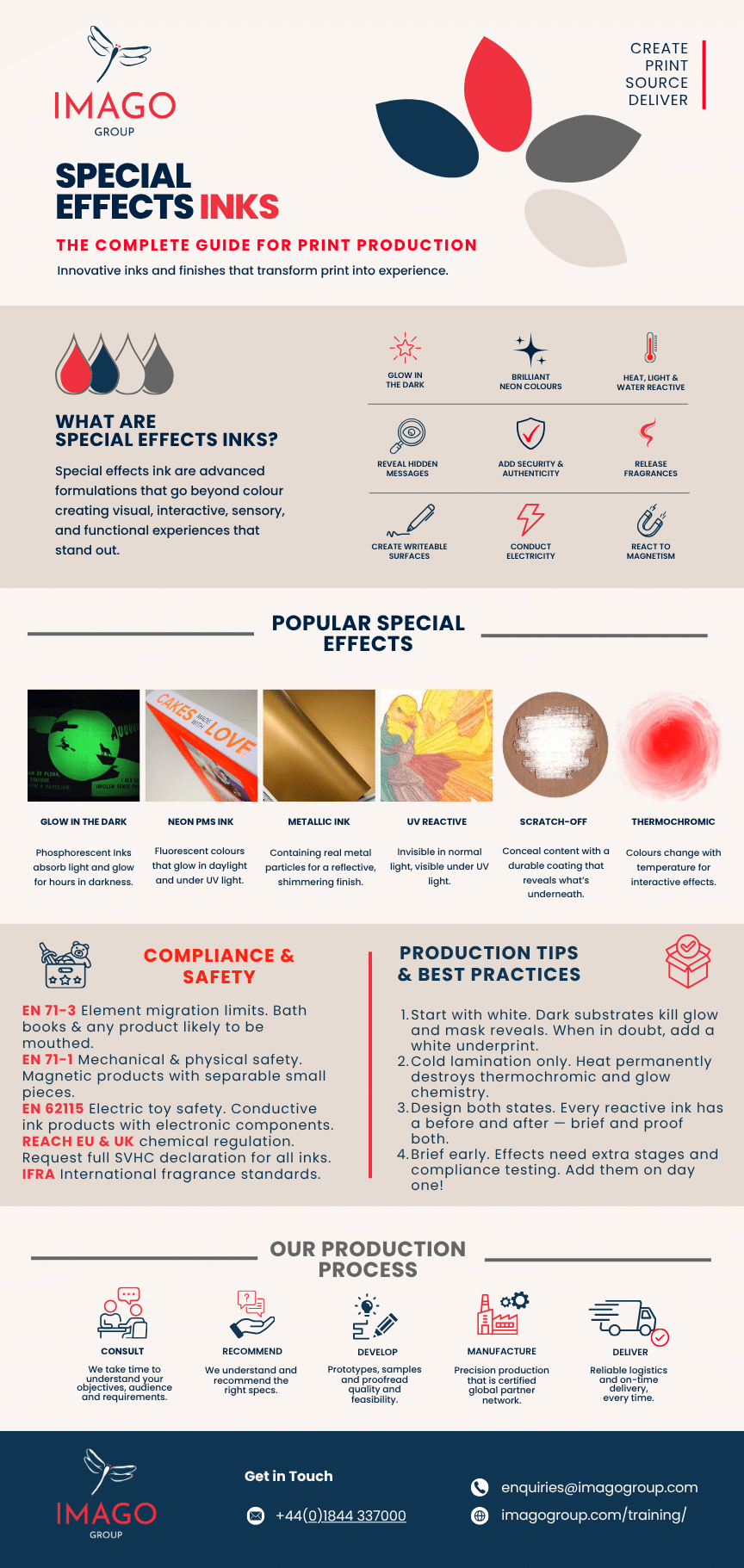
The Top Most Popular Specialty Printing Inks
Glow-in-the-Dark Ink


![glow in the dark specialty effect ink]](https://imagogroup.com/wp-content/uploads/glow4.png "glow4")
How It Works
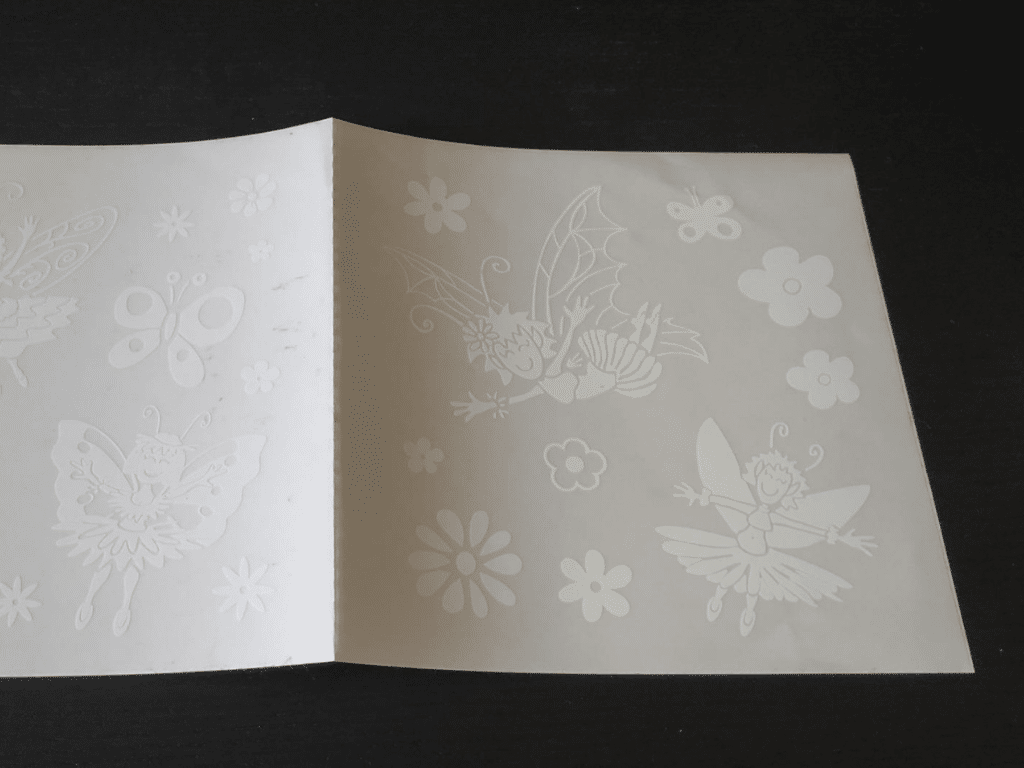
The science behind it is phosphorescence. The ink contains phosphorescent pigments, most commonly strontium aluminate crystals, that absorb light energy. When the lights go out, those stored photons are released slowly as visible light, producing the characteristic glow. Depending on the formulation, glow colours include green, aqua, blue, and violet.
Production Advice
- White substrates provide the strongest, most visible glow, dark backgrounds significantly reduce the perceived intensity.
- Screen printing is the standard process – phosphorescent crystals are too coarse and abrasive for offset litho rollers.
- Larger solid areas glow more effectively than fine details. Minimum recommended area for a satisfying effect: 10mm².
- Yellow-green is the most common glow colour; blue-green and aqua variants are available. True multi-colour glow is possible but expensive.
Neon PMS Ink



How It Works
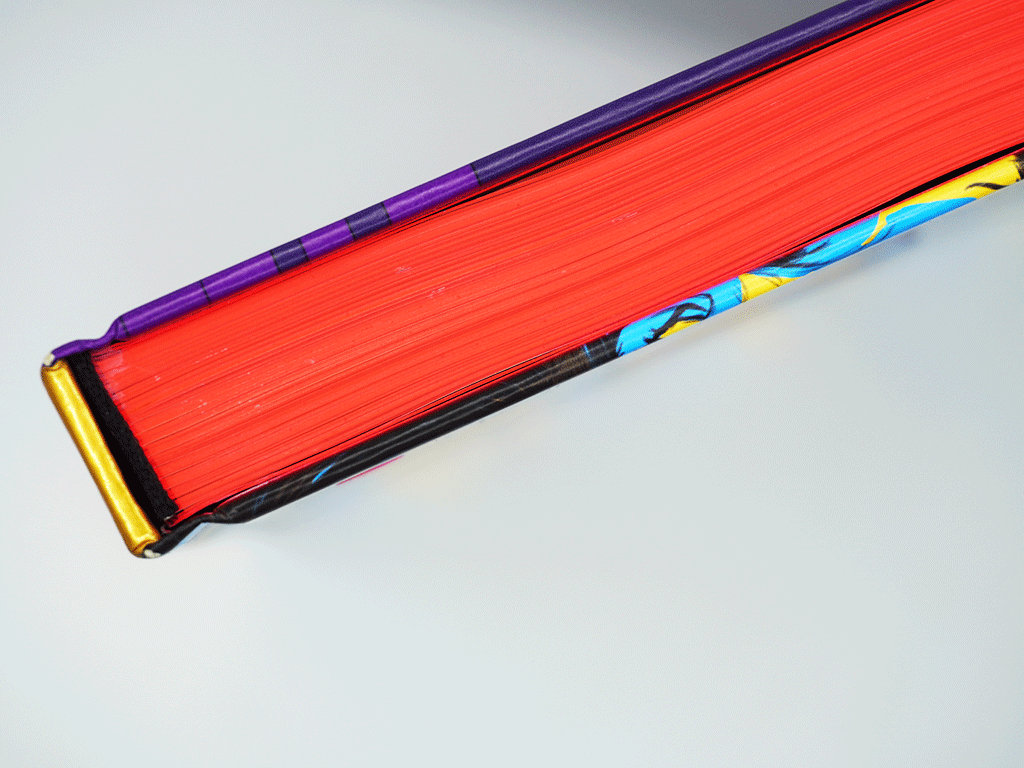
Neon inks more precisely described as fluorescent PMS spot colours use pigments that absorb UV radiation from ambient daylight and immediately re-emit it as visible light. The result is a colour that appears to exceed normal pigment saturation: the ink amplifies light rather than simply reflecting it. Common options include Pantone fluorescent yellow, green, orange, red, pink, magenta, and blue.
Production Advice
- Neon inks are spot colours, they must be specified as named Pantone fluorescent colours in artwork and printed as a dedicated ink unit.
- Neon colours are most effective on uncoated white stocks, where the surface texture adds to the matt vibrancy. Coated stocks also work well; dark or coloured substrates reduce effectiveness.
- Standard inkjet proofs can only simulate CMYK and cannot accurately reproduce fluorescent pigments, the result on proof will always look duller than the printed sheet.
- Colours can fade faster than conventional PMS inks under prolonged UV sunlight exposure. Specify UV-stabilised vehicles for outdoor or long-life applications.
Water Reactive Ink

How It Works
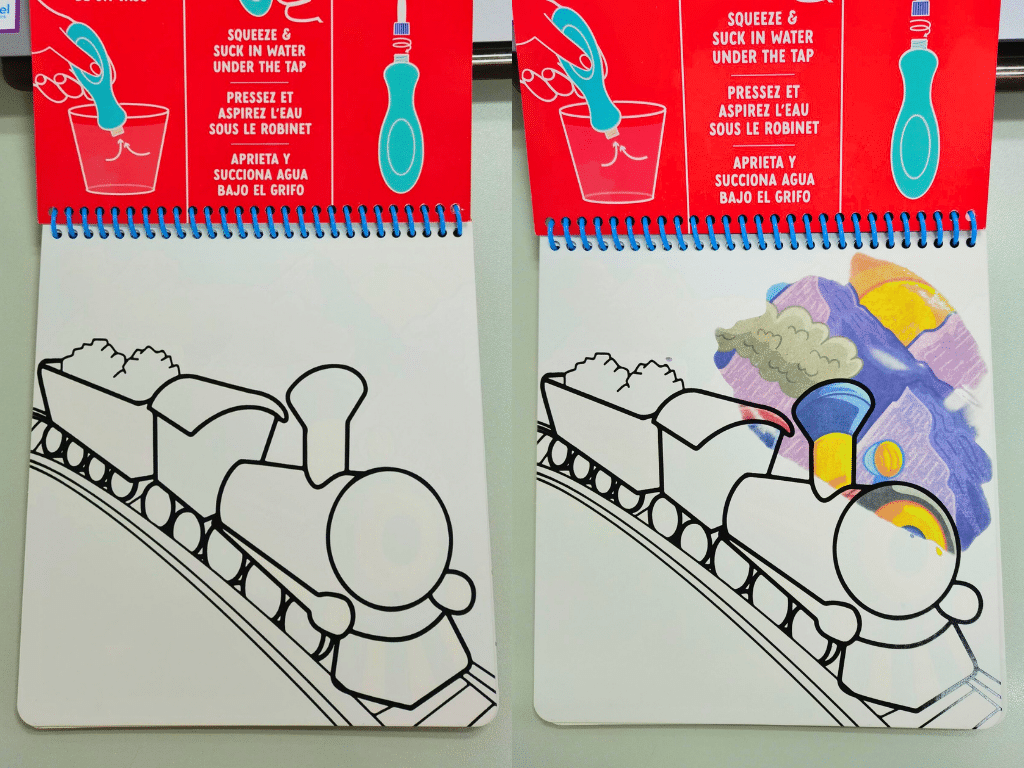
Water reactive inks bloom into full colour when wet, then fade back to a near-invisible state as the water evaporates. The effect is fully reversible and repeatable. Some formulations reveal hidden imagery; others transition between two colour states. The interaction requires only plain water, no paint, no mess, no staining.
Production Advice
- The reveal design requires careful planning. The dry state and the wet state are two distinct visual experiences that both need to be designed. The dry state should suggest the illustration without fully revealing it.
- Careful substrate selection is critical, absorbency, coating weight, and surface treatment all affect activation speed and consistency.
- Check the re-use cycle. Confirm how many times the ink can be activated before it degrades or stops working.
For bath books: the entire product construction must be waterproof and safe for immersion.
Metallic PMS Inks


How It Works
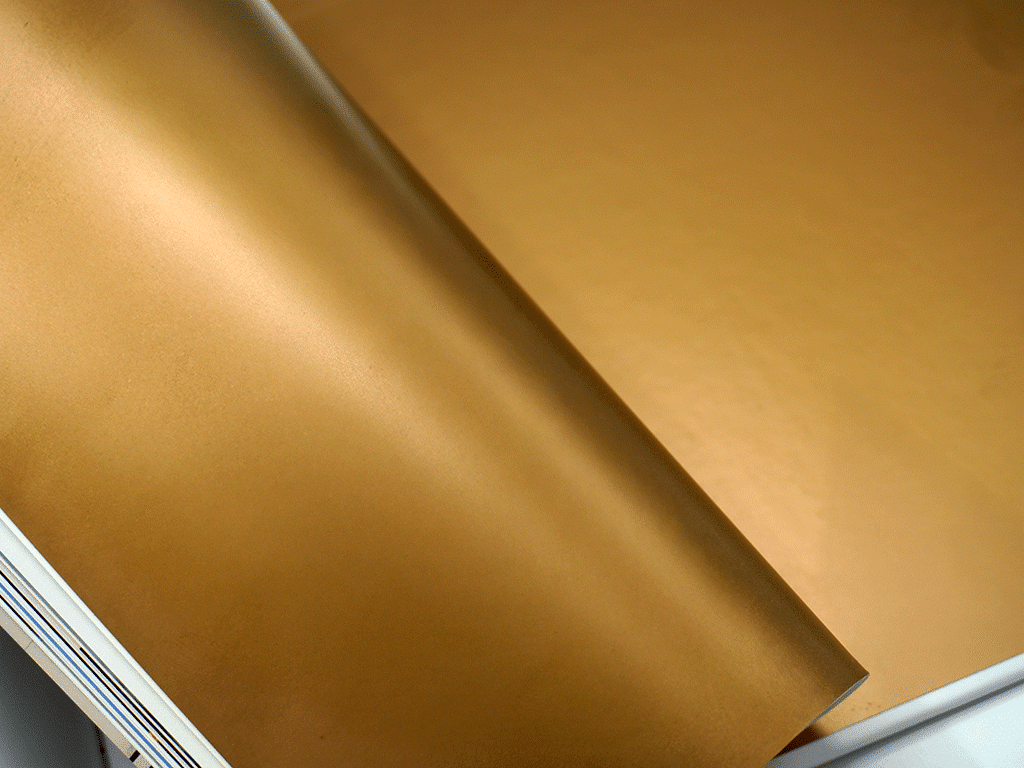
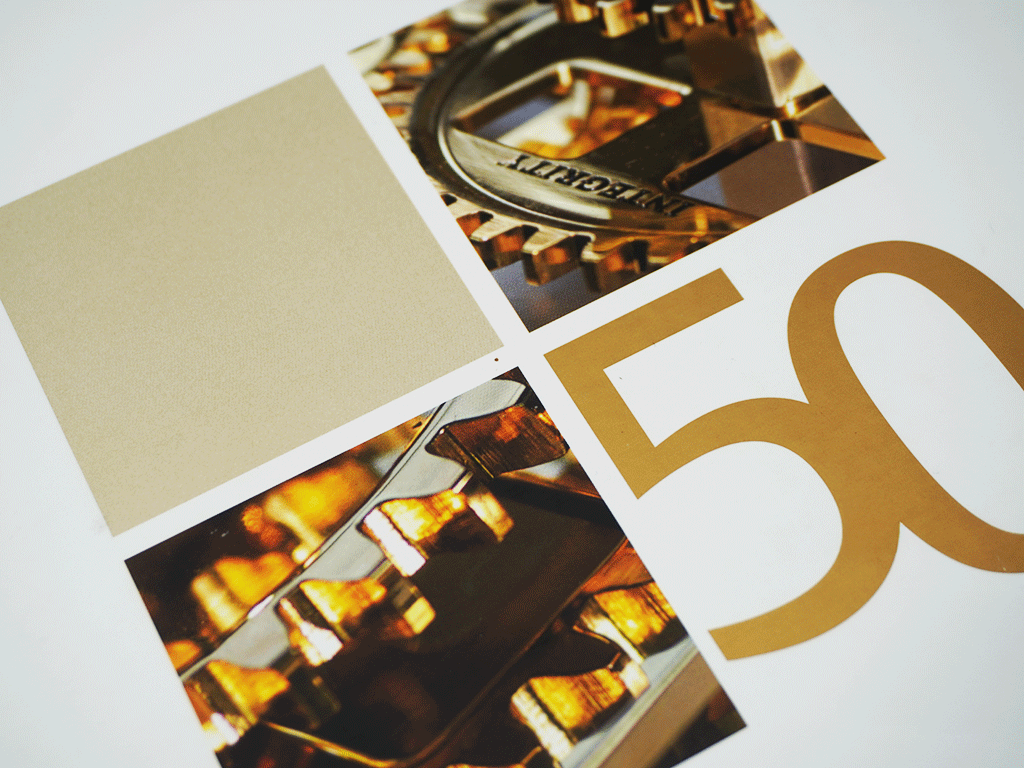
Metallic inks contain fine aluminium or bronze pigment particles suspended in standard ink. When applied to a smooth substrate, these particles align into a reflective layer that mimics the appearance of metal foil.
The effect isn’t quite as intensely reflective foil stamping, but it integrates naturally into multi-colour offset or screen print workflows.
Gold and silver are the most common formulations, but custom mixing can achieve copper, rose gold, and other metallic tones. Metallic inks can also be combined with spot UV or varnish (selectively) to add dimensionality to premium packaging.
Production Advice
- Metallic PMS inks work best on large areas with smooth, coated substrates. Uncoated or textured substrates scatter the pigment particles during absorption, reducing the reflective effect.
- If the job involves overprinting with other colours (e.g. black text, keylines), this requires a 2-pass printing process: wet to dry. The metallic ink must be printed first and allowed to dry completely before any subsequent colour is applied. Overprinting onto wet metallic ink causes the overprint colour to absorb into it, compromising both the metallic effect and colour accuracy.
- Avoid matt lamination over metallic inks, as it can kill the metallic sheen.
- Metallic PMS ink is the right choice when the metallic quality needs to integrate into illustration or cover typography across a larger area.
Photochromic Ink


How It Works
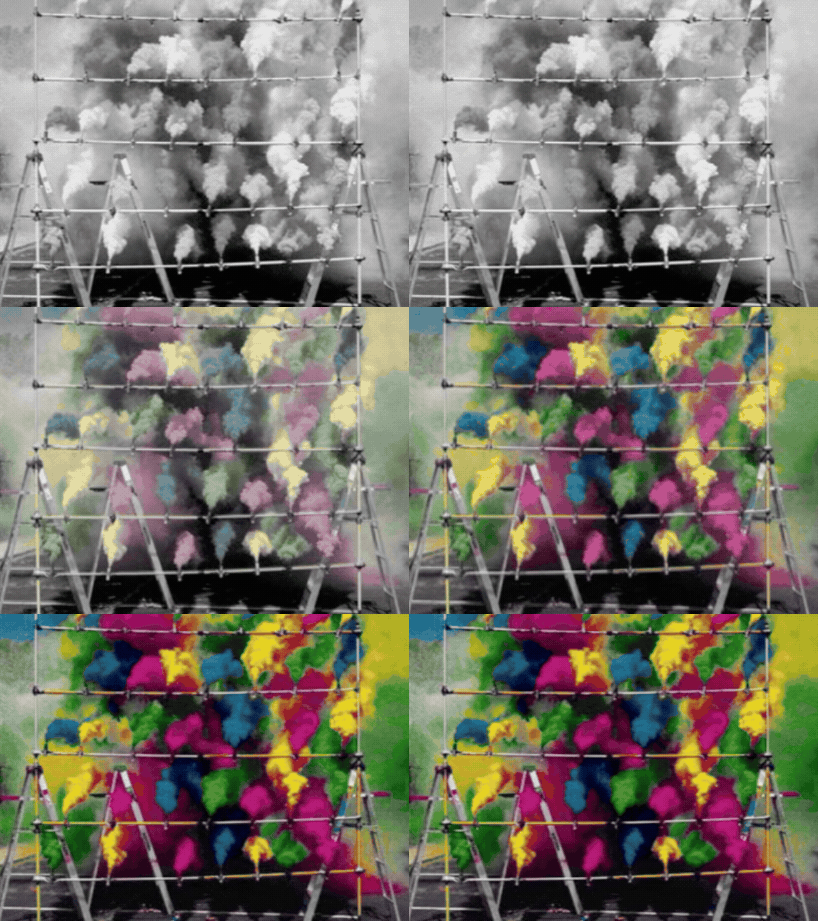
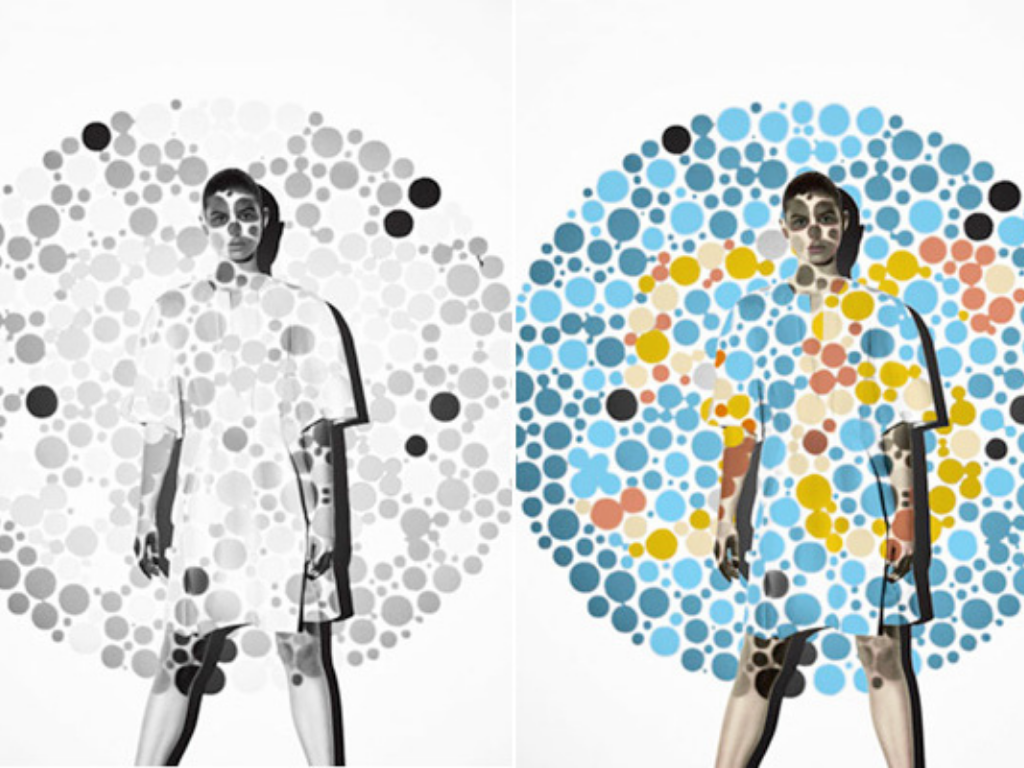
The ink contains photochromic dyes (most commonly spirooxazine or naphthopyran compounds) that undergo a reversible molecular structural change when exposed to UV radiation. In their resting state (indoors, away from UV), the dye molecules are in a closed-ring form that absorbs little or no visible light, making the ink appear colourless. When UV light hits them, the molecules open into a different configuration that absorbs visible wavelengths, producing colour.
Remove the UV source and the molecules revert to their closed-ring state, the colour fades. Under typical conditions this transition takes between a few seconds and a couple of minutes depending on UV intensity and formulation. The effect is stable across thousands of activation cycles, making it suitable for products with long shelf lives and repeated use.
Production Advice
- Photochromic inks are typically applied via screen printing to achieve the ink deposit weight needed for a strong, visible colour change.
- Any significant UV exposure before the finished product is packaged will cause premature activation and while the effect is reversible, repeated unnecessary cycling can accelerate dye fatigue. Finished products should be packaged in UV-opaque materials.
- Overprinting photochromic ink with conventional colours is possible but requires testing, some varnishes and overprint coatings can reduce the UV transmission to the photochromic layer and weaken the effect.
Scratch-off Ink


How It Works
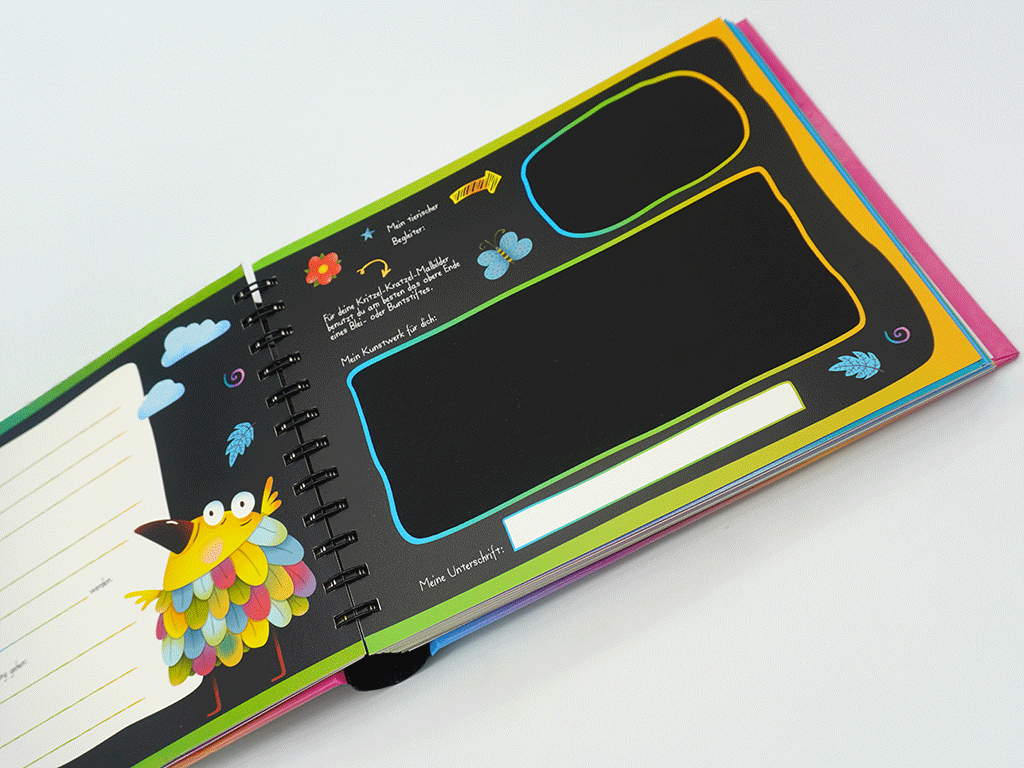
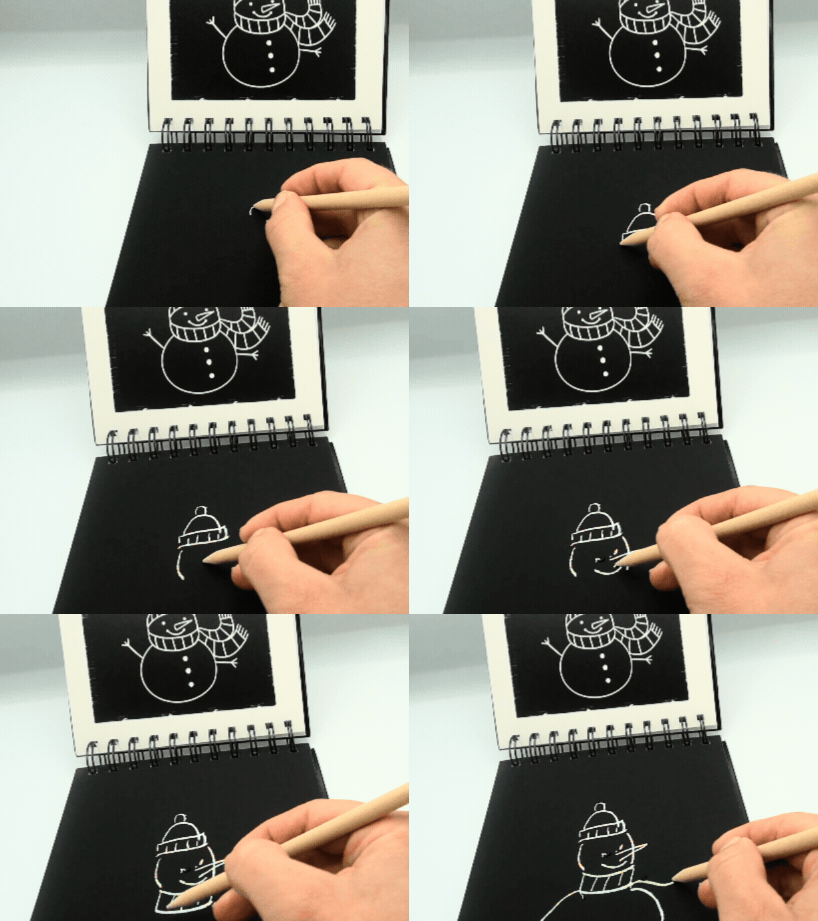
A scratch-off system applies an opaque, removable ink layer over a pre-printed reveal graphic. The overprint layer is formulated to adhere lightly enough to be removed cleanly by fingernail or coin, while being robust enough to survive handling and distribution without accidental reveal. Getting that adhesion balance right is one of the central technical challenges in scratch-off production.
Production advice
Test the scratch-off layer on the final substrate before full production. Paper coating, varnishes, and surface textures can affect adhesion and removal performance, so early testing helps avoid issues with readability or incomplete reveal.
How to Choose the Right Specialty Printing Effect
Start With Function
The most important question is: what do you need the ink to do, and when? A cold-temperature indicator points to thermochromic. A promotional reveal mechanic is scratch-off territory. A tactile premium finish points to UV printing. A colour impact brief with no interaction requirement might be best served by neon or metallic. Starting from function narrows the field quickly.
Check Substrate Compatibility Early
Most specialty inks have substrate requirements that aren’t negotiable. Metallic and neon inks need coated stocks for best performance. Glow inks need a white base. If your substrate is fixed, check compatibility before committing to an ink type — changing substrate late in development is expensive.
Understand Your Print Process Constraints
Several specialty ink types are screen-print only. If your job is offset or digital, that limits you to metallic, fluorescent, and some UV systems as a primary process. Screen printing as a secondary pass over an offset base adds cost and lead time but opens up the full specialty ink range.
Factor in Compliance Scope
If your product is for children, food-adjacent, or uses a regulated promotional mechanic, compliance requirements need to be confirmed before press — not after. EN71, REACH, IFRA, and gambling regulations all have implications for material selection, testing, and documentation. Build that timeline in from the start.
Specialty Printing FAQs
What are specialty printing inks?
Specialty printing inks are advanced formulations that produce visual, tactile, or interactive effects beyond standard colour reproduction including glow, colour change, metallic sheen, UV reactivity, scratch-off removal, and scent release.
How does thermochromic ink work?
Thermochromic ink contains microencapsulated leuco dyes that change colour at a specific temperature threshold. Below that threshold the ink is one colour; above it, the dye becomes transparent. The effect is reversible and can be tuned to activate at temperatures ranging from near-freezing to body heat.
Is glow-in-the-dark ink safe for children's products?
Yes, when correctly formulated and tested. Glow inks for children’s products must comply with EN71-3 toy safety standards. Responsible manufacturers will provide full REACH and EN71 documentation. Always confirm compliance status with your supplier before specifying for children’s applications.
What is scratch-off ink used for?
Scratch-off ink is used wherever a hidden interactive reveal mechanic is needed. It can be combined with foil, UV, and full-colour print in multi-layer systems.
Can metallic ink be printed offset?
Yes. Metallic inks are compatible with offset printing, which makes them one of the more accessible specialty ink types for commercial print runs. For maximum reflectivity, coated stocks are strongly preferred, and matte varnish overlays should be avoided.
What's the difference between UV reactive ink and standard UV printing?
Standard UV printing refers to ultraviolet curing, a process that uses UV light to dry and harden ink. UV reactive ink is a completely different thing: it’s an ink formulation that fluoresces under UV light, used for security and interactive print applications. The two sometimes appear in the same production workflow but serve entirely different purposes.
What minimum quantities are typically needed for specialty ink printing?
This varies by ink type and process. Screen printing, the most common process for specialty inks, is generally more cost-effective at higher volumes, though practical minimum run lengths depend on the complexity of the job. Contact our production team for guidance specific to your project.
Share This: