Safety Compliance 2026 | Amazon & EU PPWR Explained
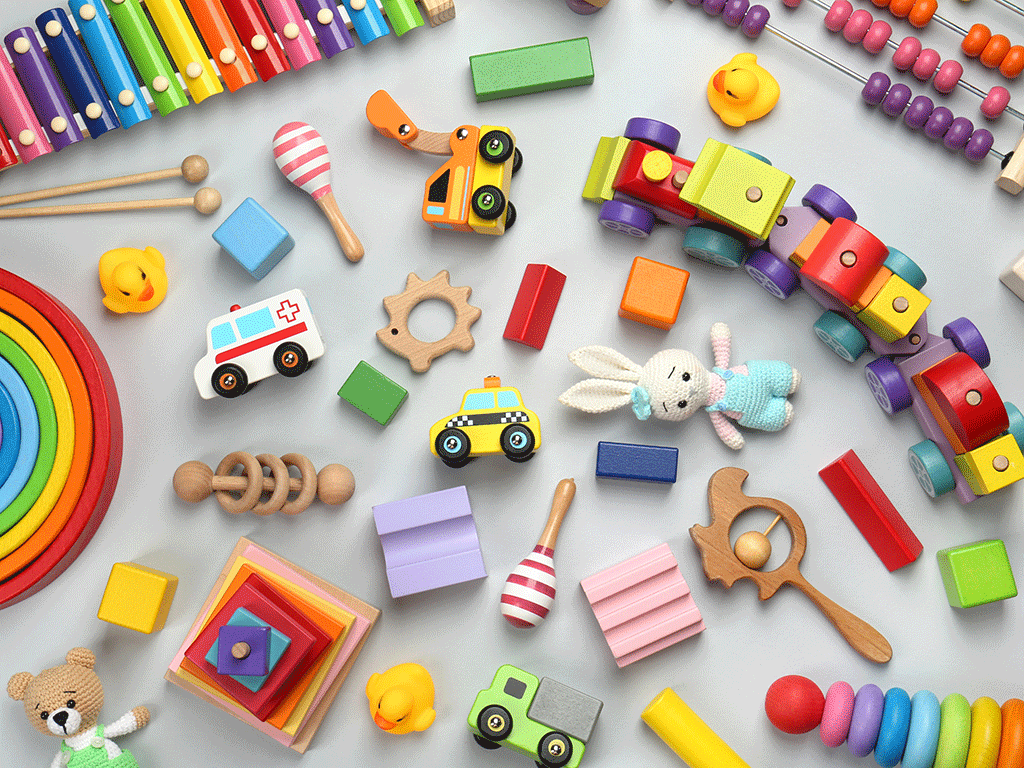
Two significant safety compliance changes have recently come into effect that are having a big impact.
If you sell children’s toys via Amazon or if you import packaging, or packaged products into the EU, your compliance to-do list just got longer.
Amazon Direct Validation | What changed?
In September 2025, Amazon updated its approach to toy safety compliance for products intended for children under 14. The changes are designed to strengthen assurance around children’s product safety by ensuring certificates are authentic and by introducing annual testing requirements. Through Amazon’s Direct Validation programme, Amazon applies a verification process that is more stringent than the obligations set out in current safety legislation.
One year on sellers are now being contacted through Amazon’s Seller Central platform and given 30 days to retest or revalidate existing products before they are delisted. This is mainly affecting card games and board games, we’ve not seen instances of books with play value falling under scrutiny so far.

The key change: sellers can no longer upload test reports themselves. All testing and validation must go through an Amazon-approved TIC (Testing, Inspection and Certification company). Approved bodies include Eurofins, SGS, Qima, Bureau Veritas, UL, Intertek and TÜV, a live list is available on Seller Central.
US and Canada: annual retesting is now mandatory
For North American markets, test reports more than 12 months old will not be accepted. The required standards are:
- USA: ASTM F963 and CPSIA
- Canada: SOR/2011-17
Cross-referencing between ASTM and SOR is not permitted, each market needs its own report. Amazon’s system won’t accept workarounds here.
Europe: annual validation, not necessarily retesting
The European approach is slightly different, though it still requires action each year.
Amazon won’t accept self-certified toys. Standard toys must be tested to EN71 Parts 1, 2 and 3 (plus additional standards where relevant). Full retesting isn’t required every year unless the standards themselves are revised but test reports still need to be validated annually by an approved TIC.
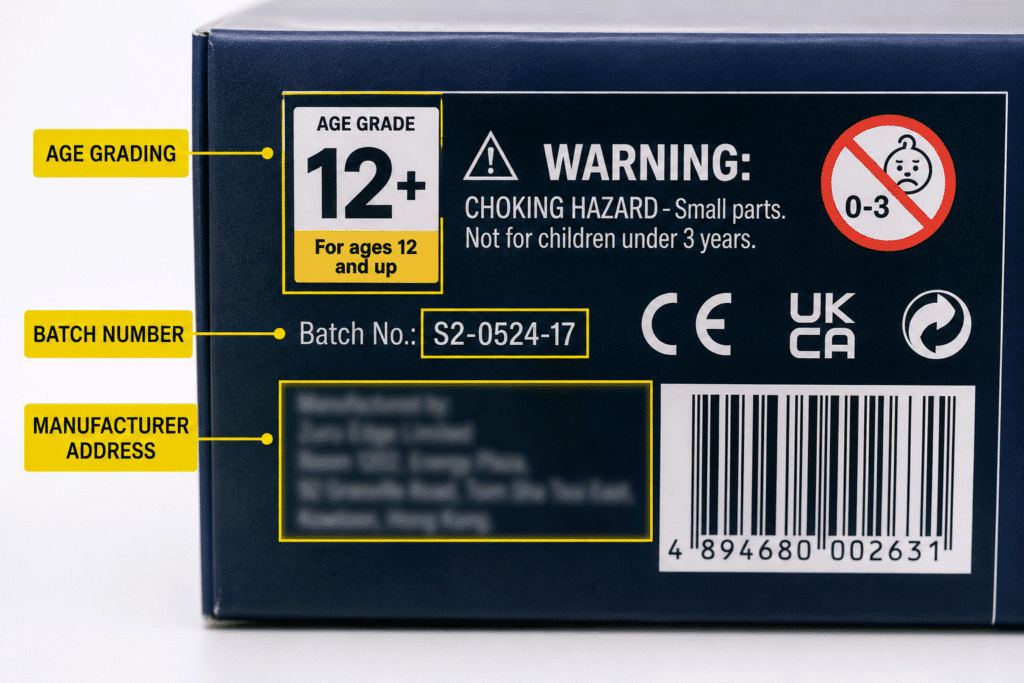
On labelling, Amazon’s requirements are precise
For all markets you’ll need: manufacturer or importer name and physical address, date and place of manufacture, batch/lot number (a date alone next to a barcode will be rejected), and age grading that matches your listing exactly
EU PPWR: The Packaging Regulation Now in Effect
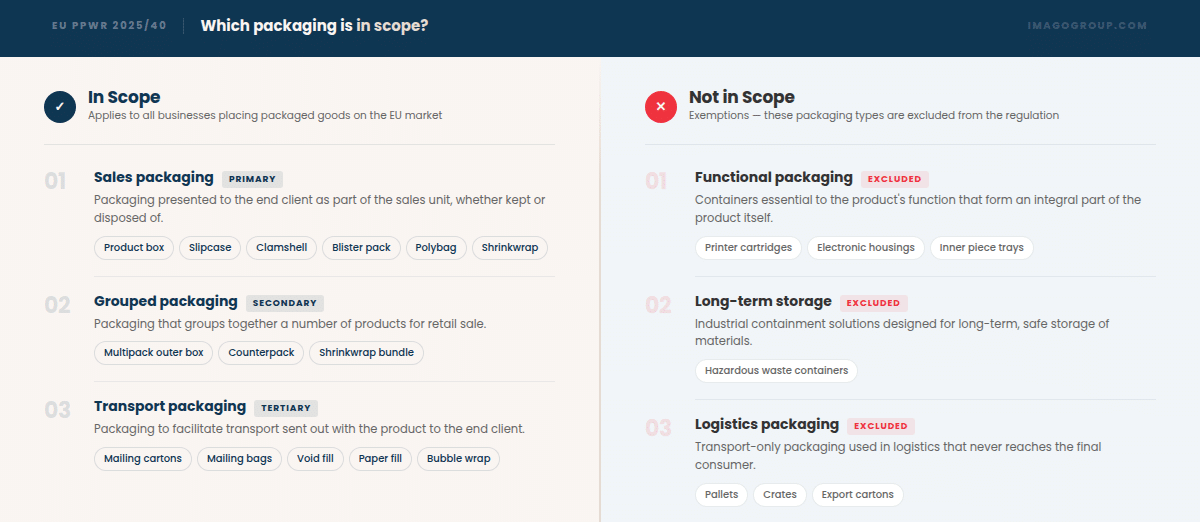
The EU Packaging and Packaging Waste Regulation (PPWR) 2025/40 replaced the old Packaging Waste Directive in February 2025. Requirements are being phased in from August 2026 and apply across all 27 EU member states, to any business placing packaged goods on the EU market, whether based in Europe or not.
The definition of packaging is broad: if something contains, protects or presents a product to a consumer, it’s in scope. That means boxes, slipcases, polybags, shrinkwrap, mailing cartons and bubble wrap are all covered. Inner trays essential to a product’s function, and logistics-only packaging that never reaches the warehouse, are out of scope.
Safety Compliance Responsibilities
Your exact responsibilities depend on your role—such as whether you are an EU brand owner, an importer, or part of the supply chain. In general, fulfilling safety compliance has several parts for brand owners which are phased in over time:
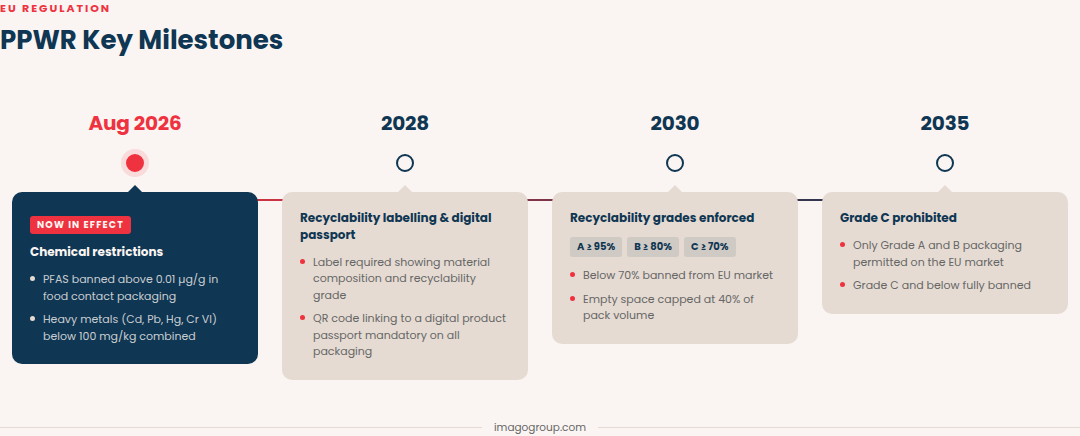
- Substance Restrictions (Now active): Ensuring that all packaging meets strict chemical safety limits, including a total ban on PFAS in food-contact packaging and caps on heavy metals.
- Declaration of Conformity & Technical File (Now active): You can no longer put packaging on the market without an official, self-signed Declaration of Conformity backed by an audited technical folder.
- EPR Registration (Now active): Brand owners must actively contribute towards the collection and recycling costs of their packaging. You must register in each individual EU member state where you sell, and non-EU brands must legally appoint an Authorised Representative (AR).
- Packaging Design & Minimisation (Phased 2028 / 2030): Audit packaging sizes to reduce empty space below 50% by 2028
- Recyclability (Enforceable 2030): Ensure your materials are strictly designed to be recycled based on upcoming EU criteria. Under this milestone, unrecyclable packaging will be banned from the market.
The takeaway here is that you need to review your packaging materials, coordinate with your suppliers, and ensure EPR egistrations are active.
Toy Safety Training with Imago
Keeping up with changes like these is one thing. Knowing how to apply them confidently to your own products is another and that’s where our toy safety training comes in.
Understanding Toy Safety is our introductory course, designed specifically for publishing and production teams working in the children’s market.
No prior toy safety knowledge is required. The course gives a clear, practical overview of:
- The European Toy Safety Directive and EN71 standards
- CPSIA and ASTM F963 for the US market
- Chemical safety compliance and hidden hazards
- When a book becomes a toy and why that matters
- Age grading, warnings and product markings
- How toys are tested and how children interact with products
It’s practical, approachable, and grounded in real publishing examples.
📍 Delivered in person at Imago’s UK offices in Thame
🗓 Wednesday 25 March | 9:30am–5pm
💷 £445 ex. VAT (discounts available for multiple bookings)
If you’re already familiar with the basics and want to go deeper, our Advanced Toy Safety Course focuses on one of the most challenging areas of compliance: the Safety Assessment process.
This one-day workshop is designed for experienced professionals who are responsible for signing off products and managing risk.
You’ll work through:
- How to carry out formal Safety Assessments
- Identifying physical and chemical hazards
- Understanding foreseeable and intended use
- Building and maintaining a compliant Technical File
- Knowing when to test, when to take a risk-based approach, and how to manage costs
📍 Delivered in person at Imago’s UK offices in Thame
🗓 Wednesday 29 April | 9:30am–5pm
💷 £445 ex. VAT (discounts available for multiple bookings)
Learn from a Toy Safety Expert
Both courses are delivered by Diane Greaves, who has spent over 30 years working in children’s product safety.
Diane has managed accredited toy testing laboratories, worked as a hazard and risk assessor, and now advises retailers and publishers as an independent consultant. She also sits on several UK and EU standards committees, bringing real-world experience and clarity to a subject that can often feel overwhelming.

Getting Ready for the new Toy Safety Updates
With toy safety regulations continuing to evolve, now is the right time to review your processes and build confidence across your team.
The earlier safety is considered, the easier it is to manage, and training is one of the most effective ways to do that.
📩 To register your interest or find out more, email training@imagogroup.com
Do you have an upcoming project?
Contact us today to discover how Imago Group can assist you in meeting your product safety requirements.
Share This: