Sustainability Update 2026: EmpCo Directive & what brands need to know

Sustainability Update 2026 | What do you need to know?
EmpCo marks a shift in the way environmental claims must be communicated in the EU. The Directive legally prohibits vague, unsubstantiated claims around being ‘eco-friendly’ or using ‘sustainable materials’ unless they are backed up with clear scientific evidence or verified through recognised third party certification schemes. EmpCo aims to raise the bar for transparency and accountability, demanding that environmental messaging is specific and genuinely meaningful
The goal of EmpCo is simple – to protect consumers from misleading claims and ensure sustainability statements reflect real, verifiable impact.
What is the EMPCO directive?
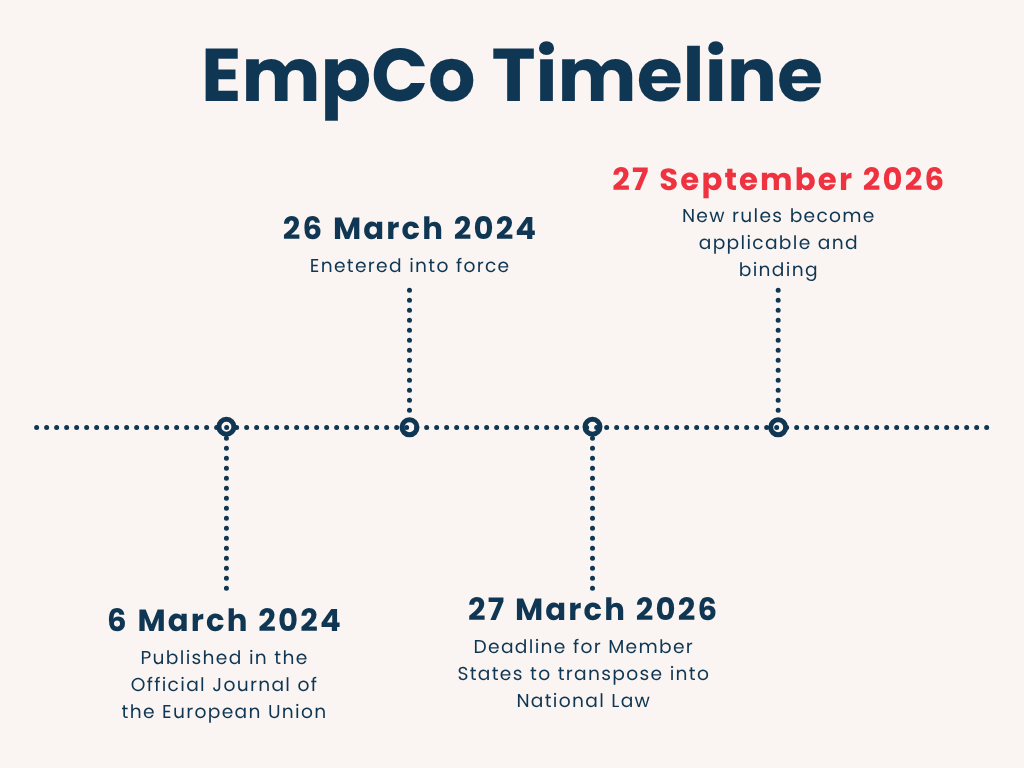
EMPCO is shorthand for the Empowering Consumers for the Green Transition Directive. It is the EU’s new anti-greenwashing directive which first came into force during 2024 and will be fully enforced by 27 September 2026. There is no sell-through period or ‘grandfathering’ that allows products with non-compliant environmental claims to remain in circulation once the directive is applied.

Sustainability Update 2026 | How will publishing and print be affected?
EmpCo will affect any business that sells products to European consumers including businesses involved in publishing, print and packaging. Communication about sustainability will require design, editorial, production and marketing teams to all work together to ensure claims are accurate and compliant. What used to sit mainly with compliance and sustainability teams now touches marketing, procurement, production, and management too.
This will affect areas such as:
- Procurement and sourcing decisions
- Claims made on product packaging
- Claims made in brochures, catalogues, and other printed marketing materials
- On product labelling on books, games, stationery, and retail products
- Website copy and campaign messaging
How is FSC™ aligning with EmpCo?
FSC™ is revising its trademark standard to align its trademarks and labelling with EmpCo. The aligned trademarks are already being provided to certificate holders.
- The ‘Forests For All Forever’ brand will be phased out because it contains a non specific environmental claim
- Changes are being introduced to labels including making ‘fsc.org’ and the product type mandatory elements of the trademark
- New rules around promotional statements
These rules are part of wider green claims packaging law enforcement, designed to eliminate ambiguity in sustainability messaging.
Vague language is no longer safe. Words like eco, green, or sustainable now need explanation or supporting data. Otherwise, they can be challenged.
Brands must now clearly define:
- Where recycling actually happens
- Whether infrastructure exists locally
- What percentage of the product is recyclable
- Any logos / labels must come from recognised schemes, self-created badges are prohibited
Every claim must be supported by documentation such as:
- Lifecycle assessments (LCA)
- Material certification
- Supplier traceability data
Packaging design must reflect actual environmental performance, not aspirational positioning.
Eco-labels and certifications must:
- Be legitimate – self created badges are prohibited
- Match the exact product scope
- Be clearly explained to avoid misleading consumers
These rules are part of wider green claims packaging law enforcement, designed to eliminate ambiguity in sustainability messaging.
Key risks for brands:
Workflow disruption / establish new processes and checks to ensure new rules are followed
Write offs – existing products with non-compliant claims / labelling should be pulled from sale after enforcement
Regulatory action from enforcement authorities including product withdrawal, corrective statements and fines for non-compliance
Risk of reputational damage over greenwashing accusations
Sustainability Training at Imago Group
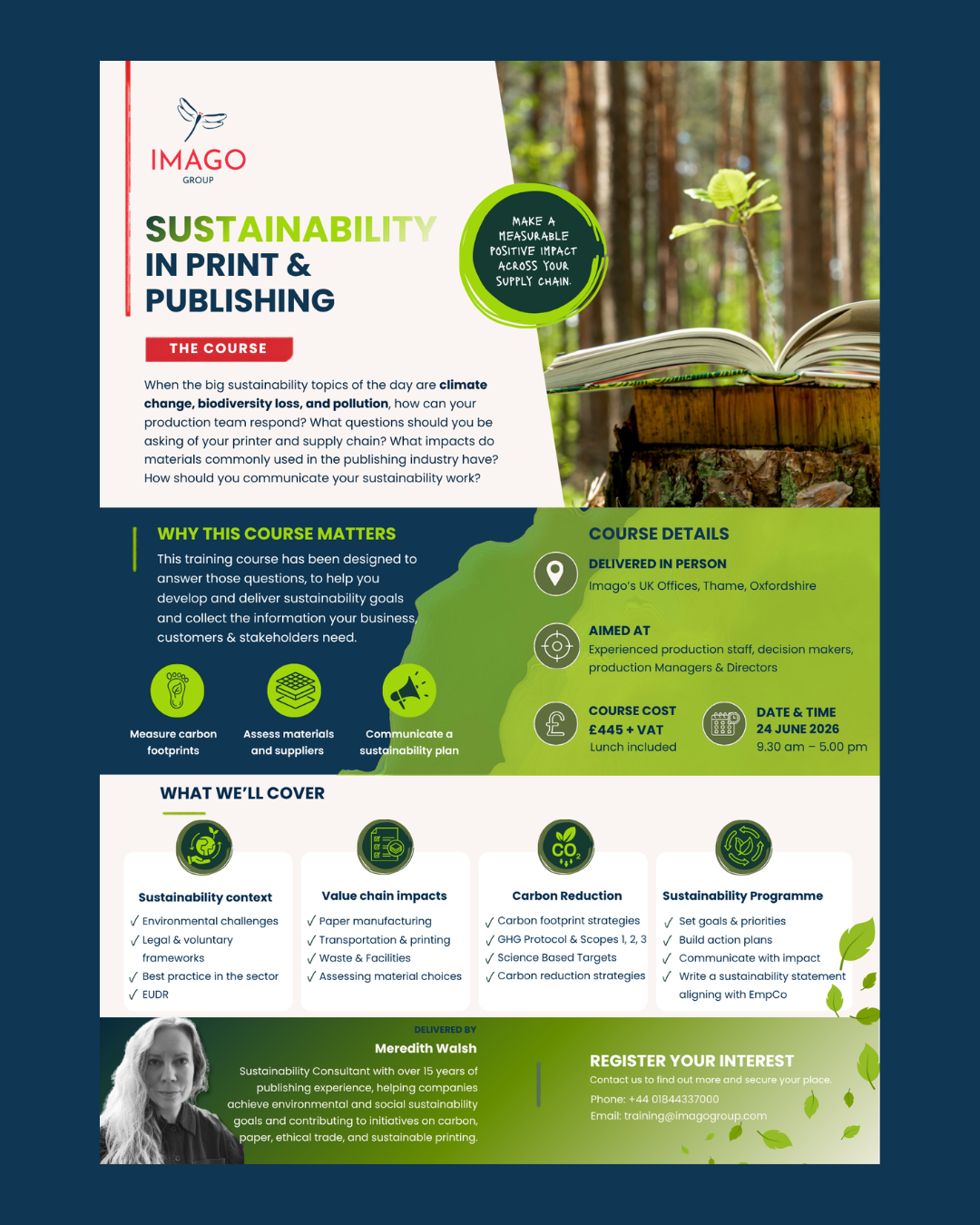
To support teams, Imago Group offers a Sustainability in Print Production training course focused on practical, real-world application.
The course covers environmental impact in print, carbon reporting (Scopes 1–3), responsible sourcing, and how to implement sustainability considerations across production and supply chains. EmpCo and wider legislation are referenced within this broader context.
Sustainability Update 2026 | Want your team to avoid greenwashing mistakes in 2026?
If your team is currently reviewing packaging, sustainability claims, or compliance processes, this training can help bring everyone onto the same page quickly and practically.
FAQs: Sustainability Update 2026
What is greenwashing ?
Greenwashing is when a business appears more environmentally responsible than the evidence can properly support.
What is EMPCO?
EMPCO (Environmental Marketing and Packaging Compliance Oversight) is a term used to describe frameworks and regulatory approaches focused on ensuring packaging and environmental marketing claims are accurate, transparent, and evidence-based.
Why are anti-greenwashing rules increasing?
Because many sustainability claims have historically been too vague or misleading, regulators are now focusing on clarity, proof, and consistency.
What happens if a claim is incorrect?
It can lead to reputational damage, regulatory challenges, product delays, or redesign costs depending on the severity.
How can brands stay compliant?
By aligning marketing claims with verified material data, working with transparent suppliers, and reviewing packaging messaging early in the process.
Does Imago Group offer sustainability training?
Yes, Imago Group provides a practical Sustainability in Print & Publishing Training Course designed to help teams understand regulations and apply them directly to real packaging and print projects.
Speak to Imago Group
If you’re reviewing packaging, print, or sustainability messaging, we can help you make sure everything is both compliant and commercially realistic.
👉 Get in touch with Imago Group to discuss sustainable print, packaging solutions, or sustainability training for your team.
Share This: