Sustainability Update 2026: EmpCo Directive & what brands need to know

Sustainability Update 2026 | What do you need to know?
EmpCo marks a shift in the way environmental claims must be communicated in the EU. The Directive legally prohibits vague, unsubstantiated claims around being ‘eco-friendly’ or using ‘sustainable materials’ unless they are backed up with clear scientific evidence or verified through recognised third party certification schemes. EmpCo aims to raise the bar for transparency and accountability, demanding that environmental messaging is specific and genuinely meaningful
The goal of EmpCo is simple – to protect consumers from misleading claims and ensure sustainability statements reflect real, verifiable impact.
What is the EMPCO directive?
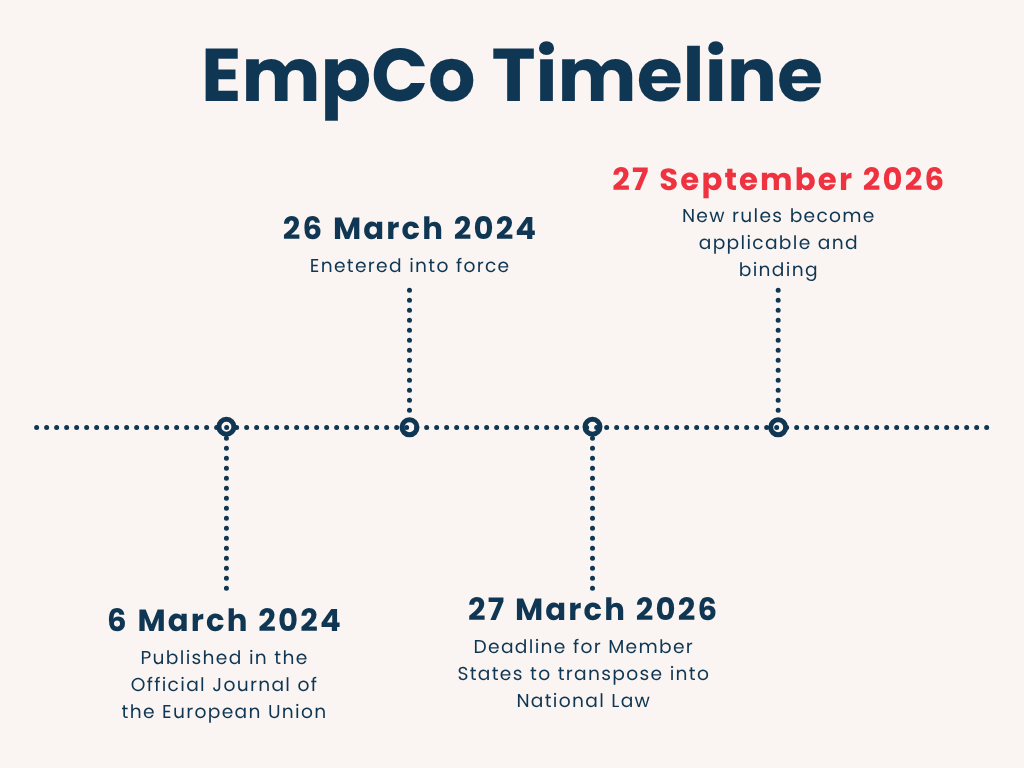
EMPCO is shorthand for the Empowering Consumers for the Green Transition Directive. It is the EU’s new anti-greenwashing directive which first came into force during 2024 and will be fully enforced by 27 September 2026. There is no sell-through period or ‘grandfathering’ that allows products with non-compliant environmental claims to remain in circulation once the directive is applied.
Sustainability Update 2026 | How will publishing and print be affected?
EmpCo will affect any business that sells products to European consumers including businesses involved in publishing, print and packaging. Communication about sustainability will require design, editorial, production and marketing teams to all work together to ensure claims are accurate and compliant. What used to sit mainly with compliance and sustainability teams now touches marketing, procurement, production, and management too.
This will affect areas such as:
- Procurement and sourcing decisions
- Claims made on product packaging
- Claims made in brochures, catalogues, and other printed marketing materials
- On product labelling on books, games, stationery, and retail products
- Website copy and campaign messaging
How is FSC™ aligning with EmpCo?
FSC™ is revising its trademark standard to align its trademarks and labelling with EmpCo. The aligned trademarks are already being provided to certificate holders.
- The ‘Forests For All Forever’ brand will be phased out because it contains a non specific environmental claim
- Changes are being introduced to labels including making ‘fsc.org’ and the product type mandatory elements of the trademark
- New rules around promotional statements
These rules are part of wider green claims packaging law enforcement, designed to eliminate ambiguity in sustainability messaging.
Vague language is no longer safe. Words like eco, green, or sustainable now need explanation or supporting data. Otherwise, they can be challenged.
Brands must now clearly define:
- Where recycling actually happens
- Whether infrastructure exists locally
- What percentage of the product is recyclable
- Any logos / labels must come from recognised schemes, self-created badges are prohibited
Every claim must be supported by documentation such as:
- Lifecycle assessments (LCA)
- Material certification
- Supplier traceability data
Packaging design must reflect actual environmental performance, not aspirational positioning.
Eco-labels and certifications must:
- Be legitimate – self created badges are prohibited
- Match the exact product scope
- Be clearly explained to avoid misleading consumers
These rules are part of wider green claims packaging law enforcement, designed to eliminate ambiguity in sustainability messaging.
Key risks for brands:
Workflow disruption / establish new processes and checks to ensure new rules are followed
Write offs – existing products with non-compliant claims / labelling should be pulled from sale after enforcement
Regulatory action from enforcement authorities including product withdrawal, corrective statements and fines for non-compliance
Risk of reputational damage over greenwashing accusations
Sustainability Training at Imago Group
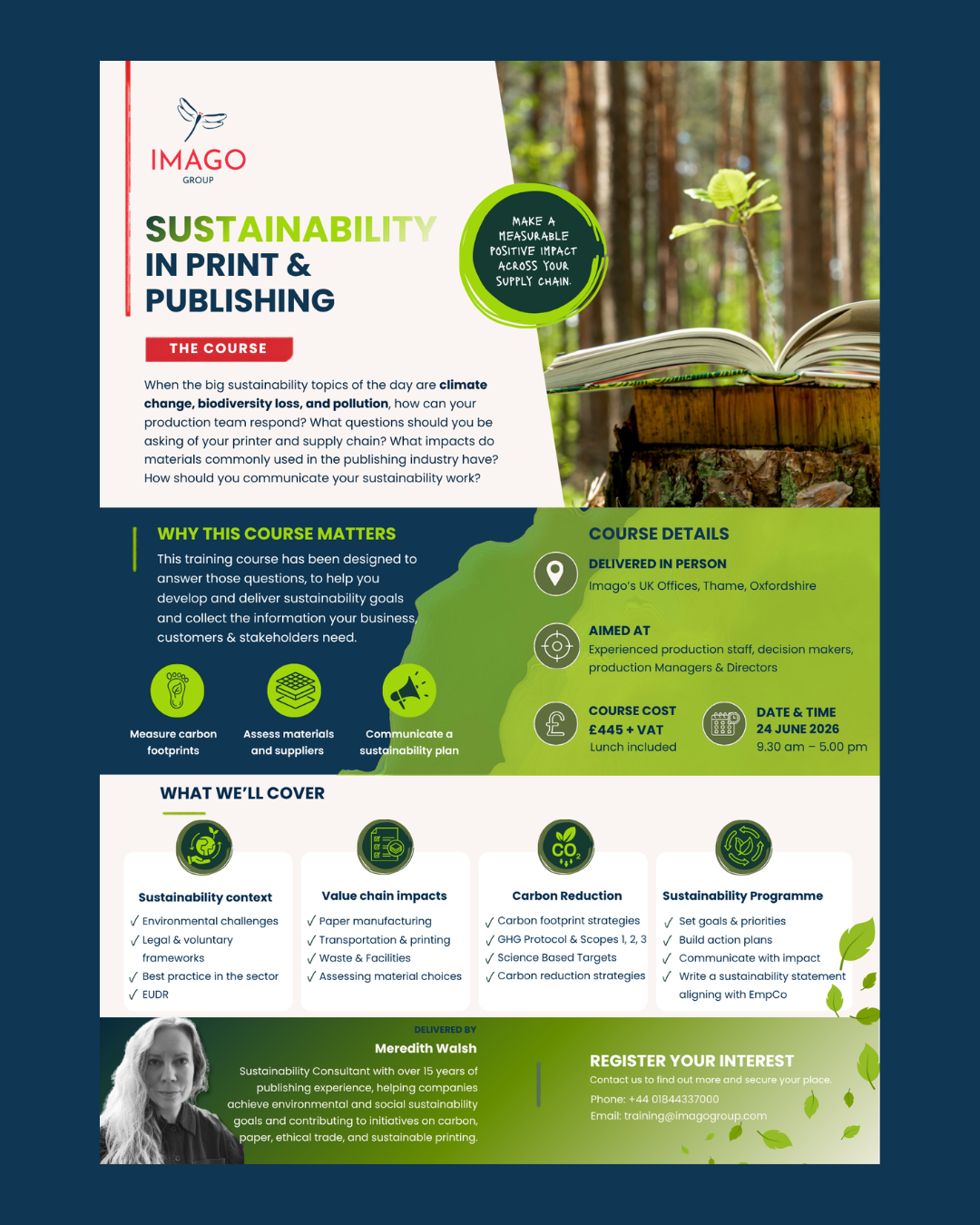
To support teams, Imago Group offers a Sustainability in Print Production training course focused on practical, real-world application.
The course covers environmental impact in print, carbon reporting (Scopes 1–3), responsible sourcing, and how to implement sustainability considerations across production and supply chains. EmpCo and wider legislation are referenced within this broader context.
Sustainability Update 2026 | Want your team to avoid greenwashing mistakes in 2026?
If your team is currently reviewing packaging, sustainability claims, or compliance processes, this training can help bring everyone onto the same page quickly and practically.
FAQs: Sustainability Update 2026
What is greenwashing ?
Greenwashing is when a business appears more environmentally responsible than the evidence can properly support.
What is EMPCO?
EMPCO (Environmental Marketing and Packaging Compliance Oversight) is a term used to describe frameworks and regulatory approaches focused on ensuring packaging and environmental marketing claims are accurate, transparent, and evidence-based.
Why are anti-greenwashing rules increasing?
Because many sustainability claims have historically been too vague or misleading, regulators are now focusing on clarity, proof, and consistency.
What happens if a claim is incorrect?
It can lead to reputational damage, regulatory challenges, product delays, or redesign costs depending on the severity.
How can brands stay compliant?
By aligning marketing claims with verified material data, working with transparent suppliers, and reviewing packaging messaging early in the process.
Does Imago Group offer sustainability training?
Yes, Imago Group provides a practical Sustainability in Print & Publishing Training Course designed to help teams understand regulations and apply them directly to real packaging and print projects.
Speak to Imago Group
If you’re reviewing packaging, print, or sustainability messaging, we can help you make sure everything is both compliant and commercially realistic.
👉 Get in touch with Imago Group to discuss sustainable print, packaging solutions, or sustainability training for your team.

Toy safety rules have a habit of changing just when you feel you’ve finally got your head around them.
With the new EU Toy Safety Regulation 2025/2509 hot off the press and new US CPSIA eFiling requirements on the horizon, now could be a good time to get up to speed.
If you create products for children these updates matter. In this article, we’ll walk you through what’s changing and how you can prepare without the stress.
What’s changing in Europe?
The EU Toy Safety Regulation 2025/2509 entered into force on January 1st 2026 bringing in some really sweeping changes. It’s worth noting that there is a 4-5 year transition period before some of the rules fully apply, allowing industry time to adjust.
In brief changes include:
- Wider chemical bans and restrictions including PFAS, endocrine disrupters and Bisphenols
- New age-grading / warning label requirements
- New rules increasing the responsibility of online marketplaces
- New rules to address mental health risks of ‘smart’ or digitally connected products
- Introduction of a Digital Product Passport to provide consumers with more information and simplify checks for customs authorities



What’s changing in the US?
The Consumer Product Safety Commission (CPSC) is making changes that will require importers of regulated products to electronically submit data to US Customs prior to import. The product safety requirements themselves remain unchanged; only the method of supplying data has shifted to electronic submission. The aim is to reduce customs examinations at ports, minimize delays, and prevent non-compliant products from entering the US.
E-filing becomes mandatory on July 8, 2026. There are seven mandatory data elements needed for E-Filing.
- Product ID / description / ISBN / Print Number
- Citation codes of applicable requirements
- Manufacturing date
- Manufacturing place – company name / address / contact info
- Testing date
- Testing lab – company name / address / contact info
- Responsible party (importer of record) – company name / address / contact info
The importer of record is responsible for ensuring E-Filing is completed and it will be the forwarder or customs broker that typically makes the submission.
Why Toy Safety Training makes life easier
Get up to speed on these requirements and more by attending an Imago Safety Training course.

Understanding Toy Safety is our introductory course, designed specifically for publishing and production teams working in the children’s market.
No prior toy safety knowledge is required. The course gives a clear, practical overview of:
- The European Toy Safety Directive and EN71 standards
- CPSIA and ASTM F963 for the US market
- Chemical safety and hidden hazards
- When a book becomes a toy — and why that matters
- Age grading, warnings and product markings
- How toys are tested and how children interact with products
It’s practical, approachable, and grounded in real publishing examples.
📍 Delivered in person at Imago’s UK offices in Thame
🗓 Wednesday 25 March | 9:30am–5pm
💷 £445 ex. VAT (discounts available for multiple bookings)
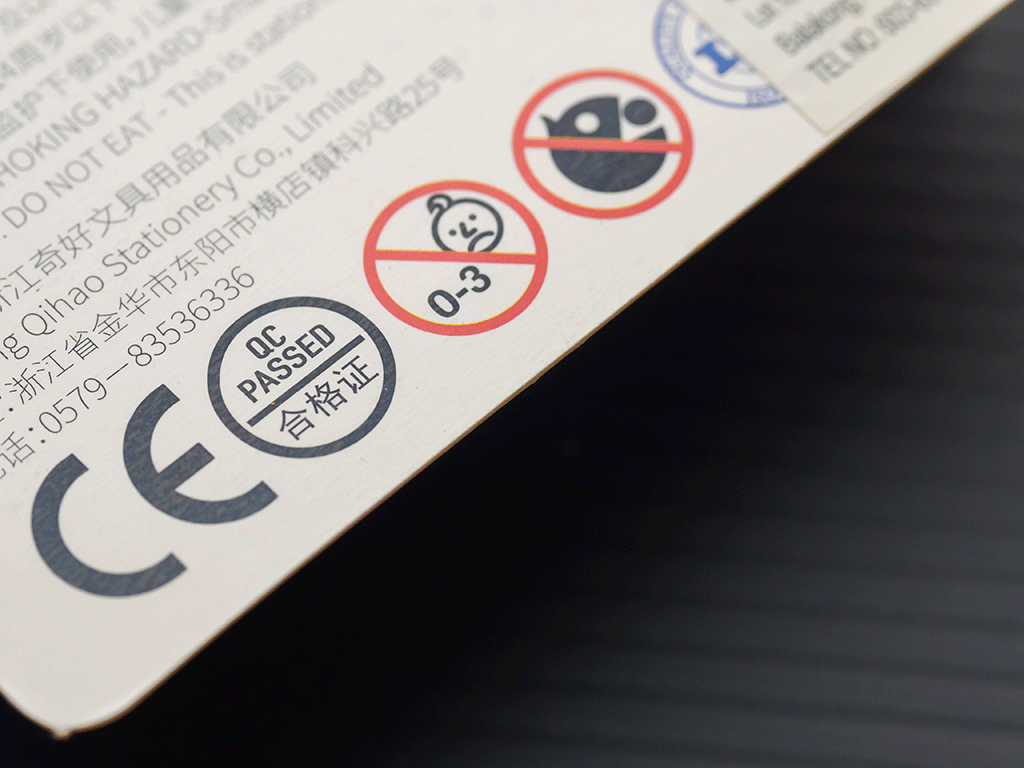
If you’re already familiar with the basics and want to go deeper, our Advanced Toy Safety Course focuses on one of the most challenging areas of compliance: the Safety Assessment process.
This one-day workshop is designed for experienced professionals who are responsible for signing off products and managing risk.
You’ll work through:
- How to carry out formal Safety Assessments
- Identifying physical and chemical hazards
- Understanding foreseeable and intended use
- Building and maintaining a compliant Technical File
- Knowing when to test, when to take a risk-based approach, and how to manage costs
📍 Delivered in person at Imago’s UK offices in Thame
🗓 Wednesday 29 April | 9:30am–5pm
💷 £445 ex. VAT (discounts available for multiple bookings)
Learn from a Toy Safety Expert
Both courses are delivered by Diane Greaves, who has spent over 30 years working in children’s product safety.
Diane has managed accredited toy testing laboratories, worked as a hazard and risk assessor, and now advises retailers and publishers as an independent consultant. She also sits on several UK and EU standards committees, bringing real-world experience and clarity to a subject that can often feel overwhelming.

Getting Ready for the new Toy Safety Updates
With toy safety regulations continuing to evolve, now is the right time to review your processes and build confidence across your team.
The earlier safety is considered, the easier it is to manage, and training is one of the most effective ways to do that.
📩 To register your interest or find out more, email training@imagogroup.com
Do you have an upcoming project?
Contact us today to discover how Imago Group can assist you in meeting your product safety requirements.
When it comes to product packaging, a box is rarely “just a box.” Box types you choose can completely change how your product is perceived, handled, and experienced. Some boxes are practical and simple, while others are designed to make you feel like you’re opening a treasure.
The box you choose for your project is as important as what’s inside. From board games and collector’s editions to luxury gift boxes, the experience starts when you open it and Imago Group has the knowledge to help you fit in the right box!
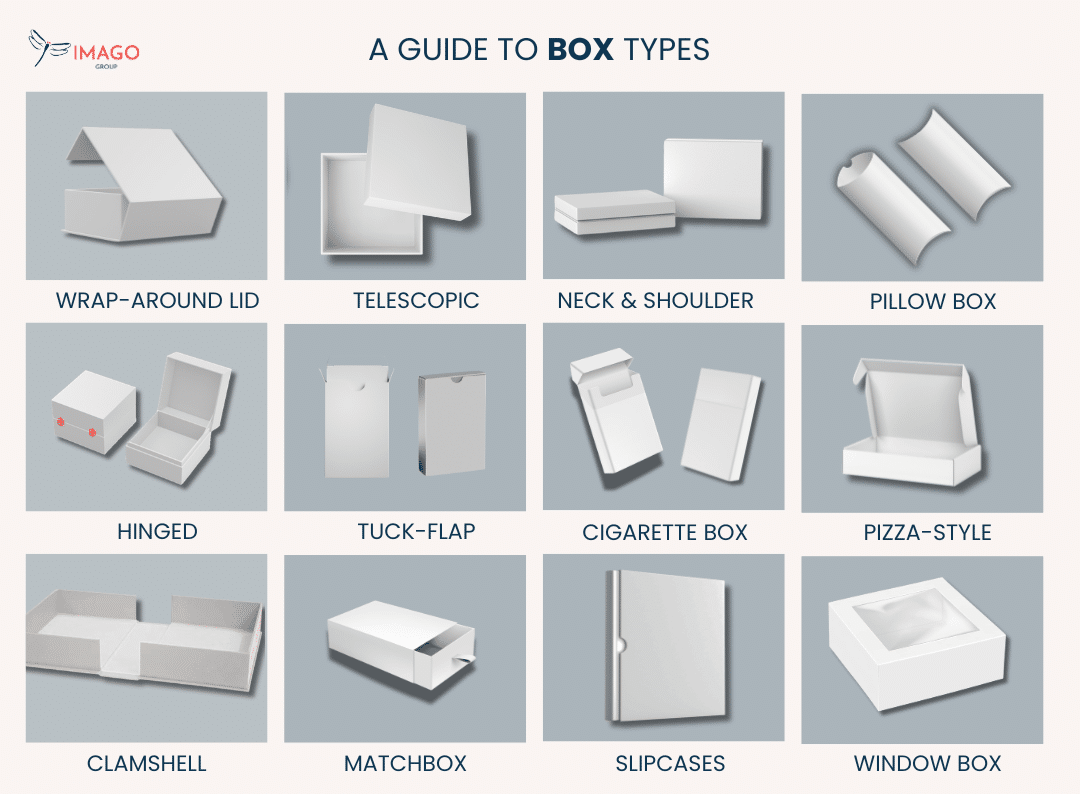
Here’s a closer look at some of the most common types of boxes, what makes them special, and when to choose them.
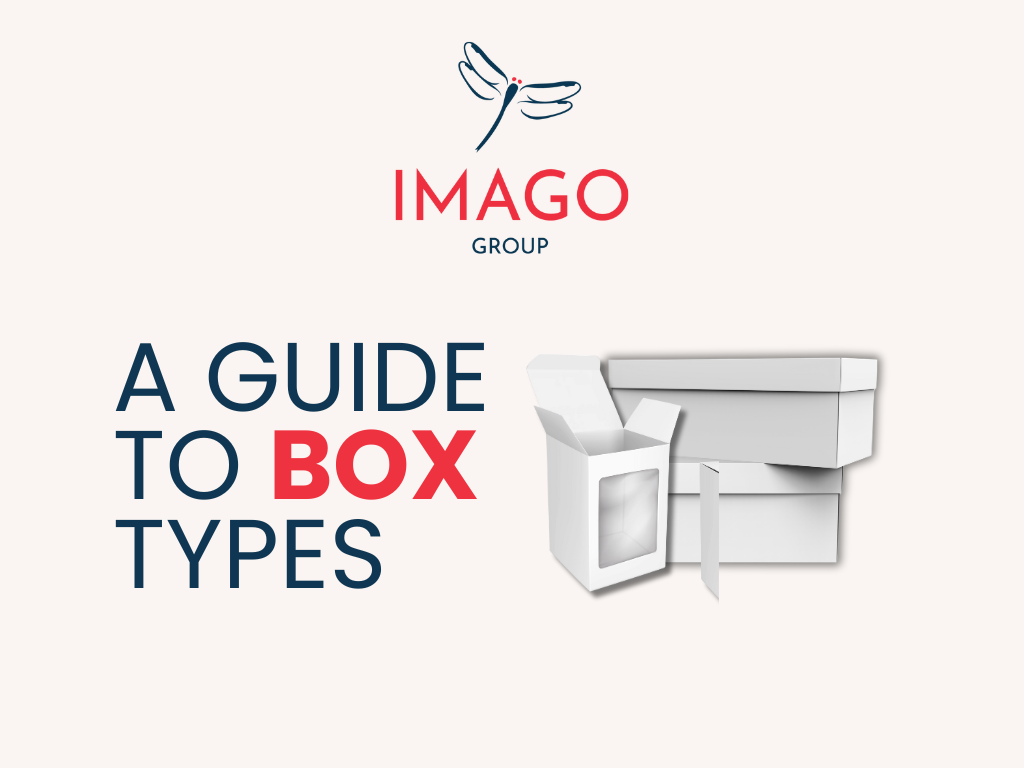
Box Types – A Visual Guide
To start off, we’ve created a quick recap of the most common box types: take a look at our infographic here for an at-a-glance overview.
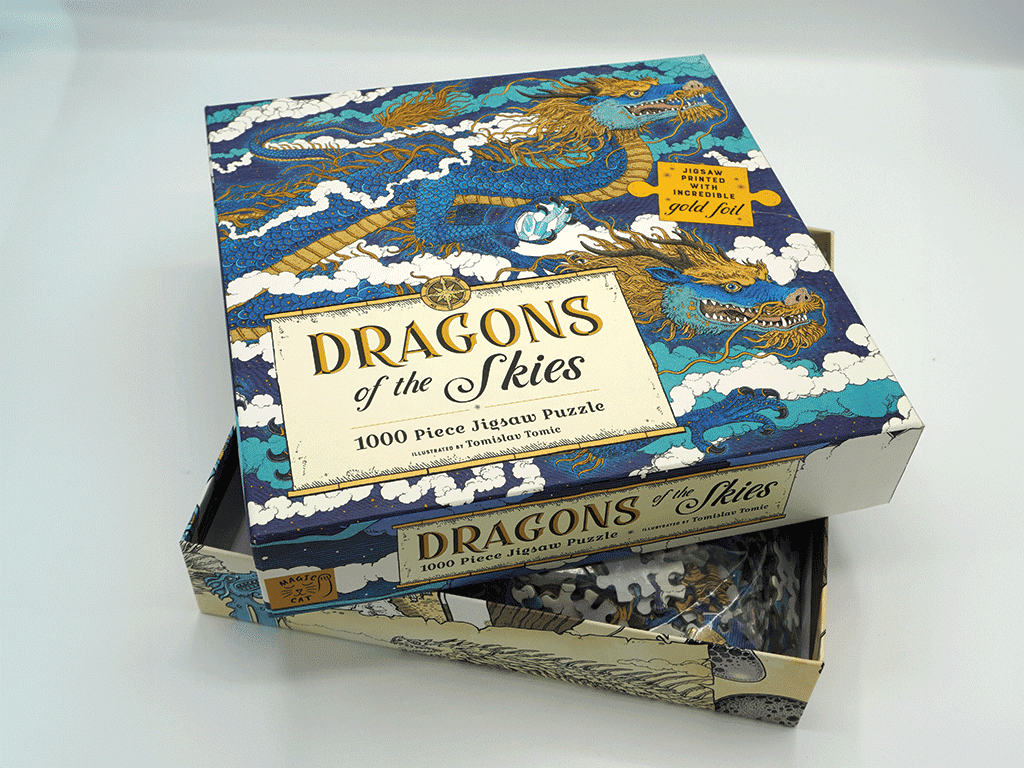
Rigid Telescopic Box (Lift-Off Lid)
A two-part box where the lid fits over the base either partially or fully.


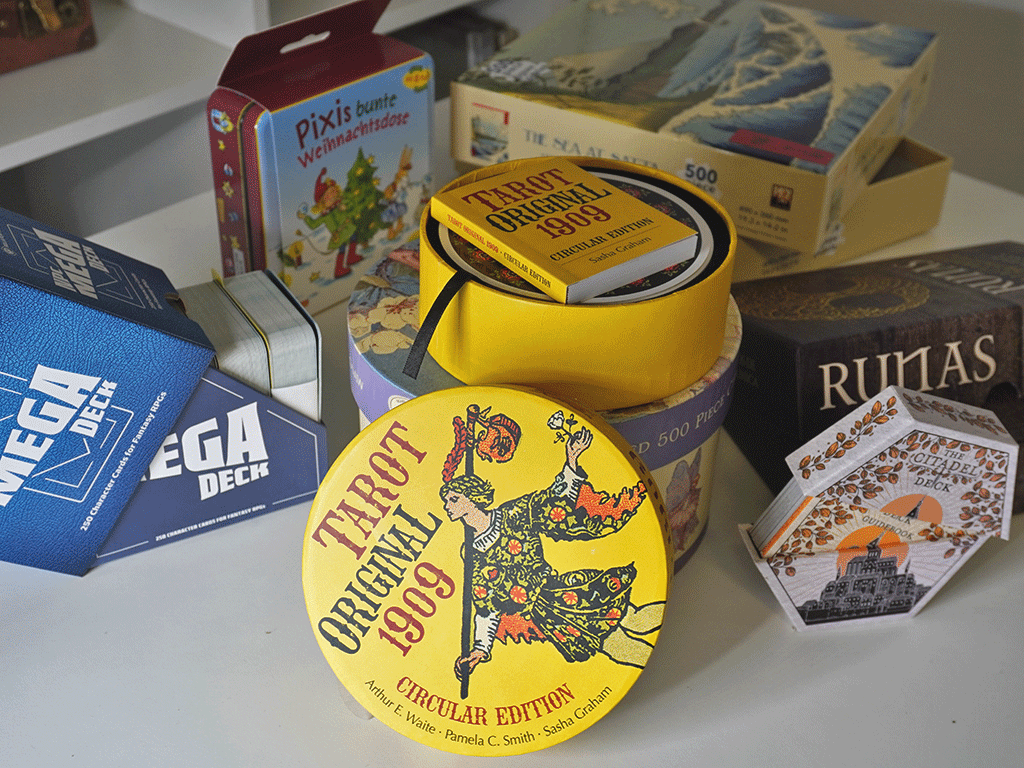
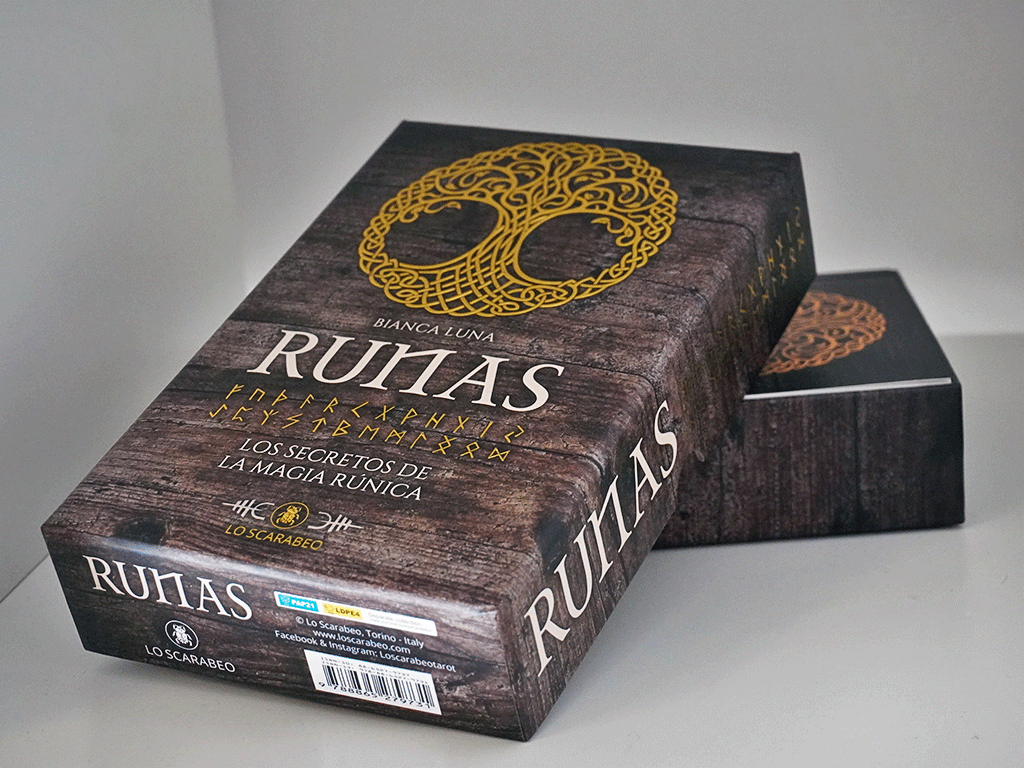
Main characteristics of box types:
- Rigid greyboard (typically 1.5–3mm depending on size & load)
- Lid depth: half-lid or full-lid designs
- Greyboard typically 1.5–3mm
- Wrapped in printed paper or specialty cover material
- Interior fitments in foam, board, or moulded pulp
- Perfect for: Collector’s editions, board game premium editions, luxury gifts


Tuck-Flap Box
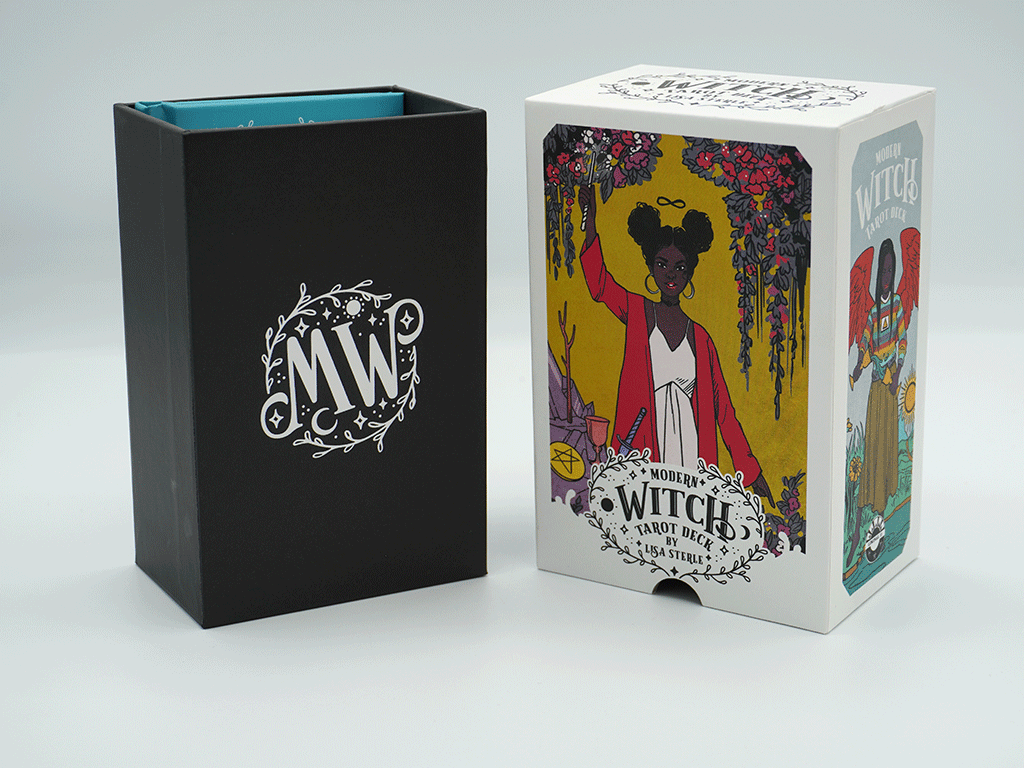
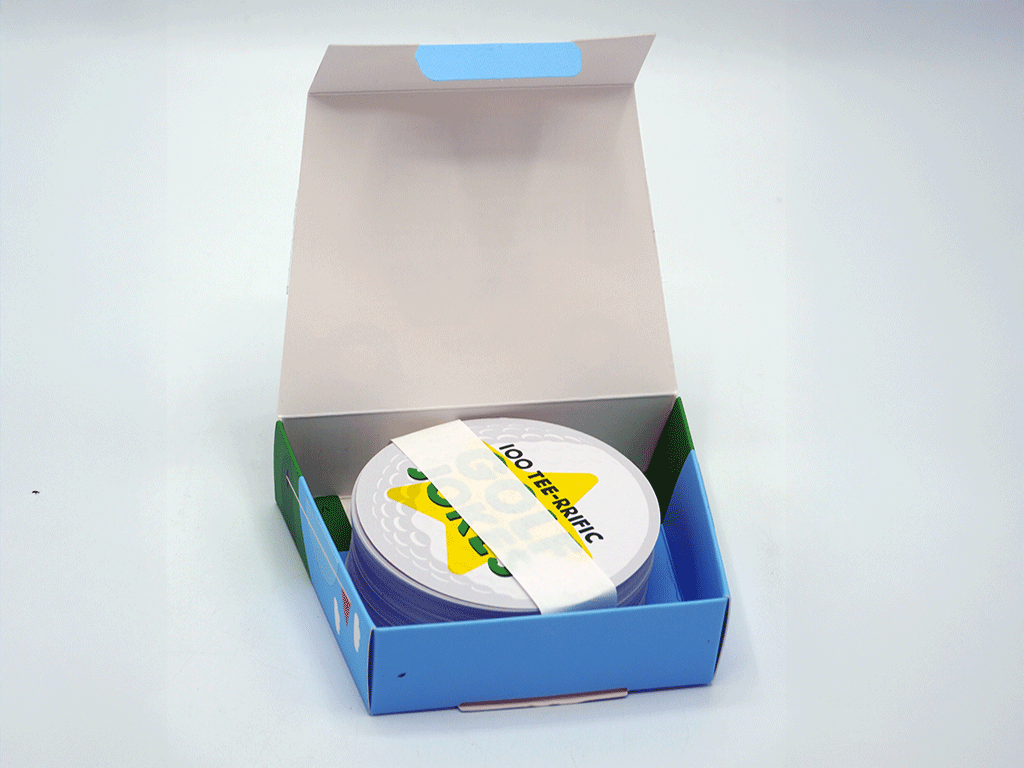
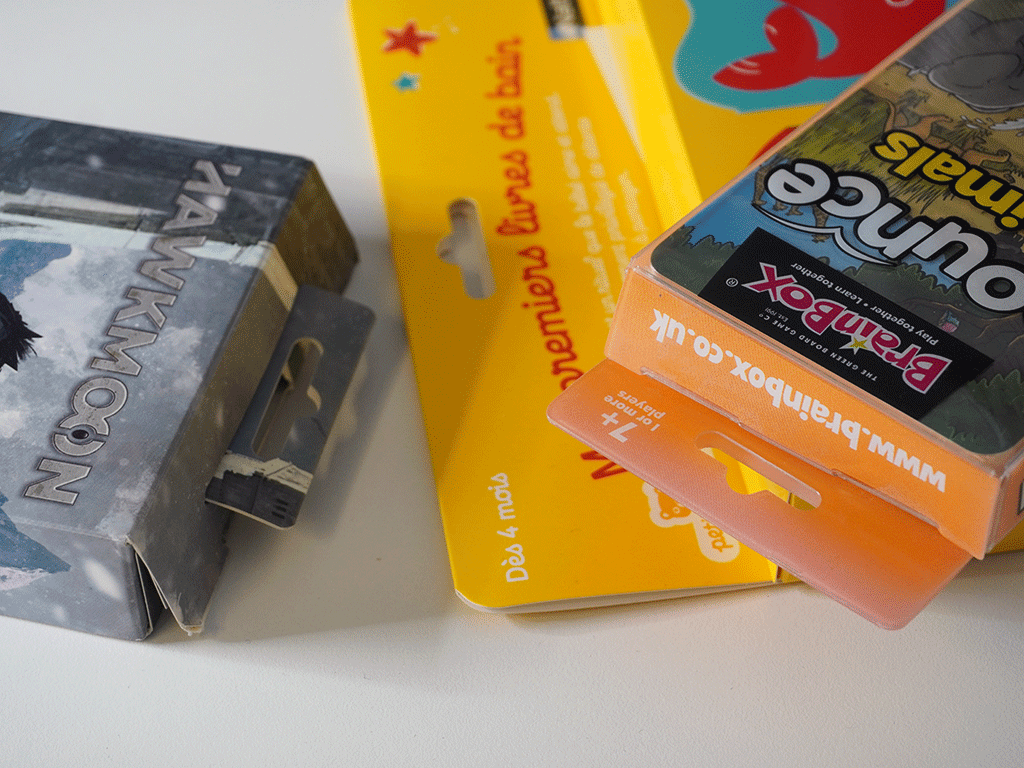
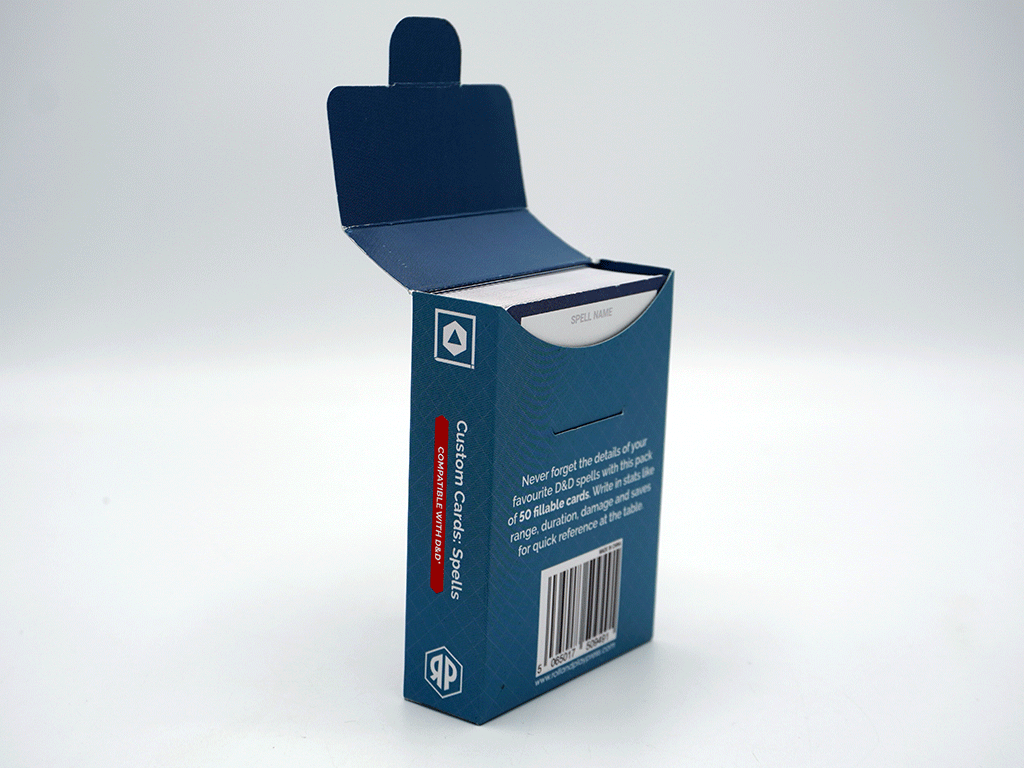
This format, very popular for card decks is a folding carton box with flaps that tuck in to close. Supplied flat, the assembly is quick and very efficient for volume production.

- Board: 250–400gsm C1S or C2S
- Closure options: front or rear tuck, locking tabs, thumb-cuts
- Additional features: hanger tab / euro slot, carry handle, viewing window

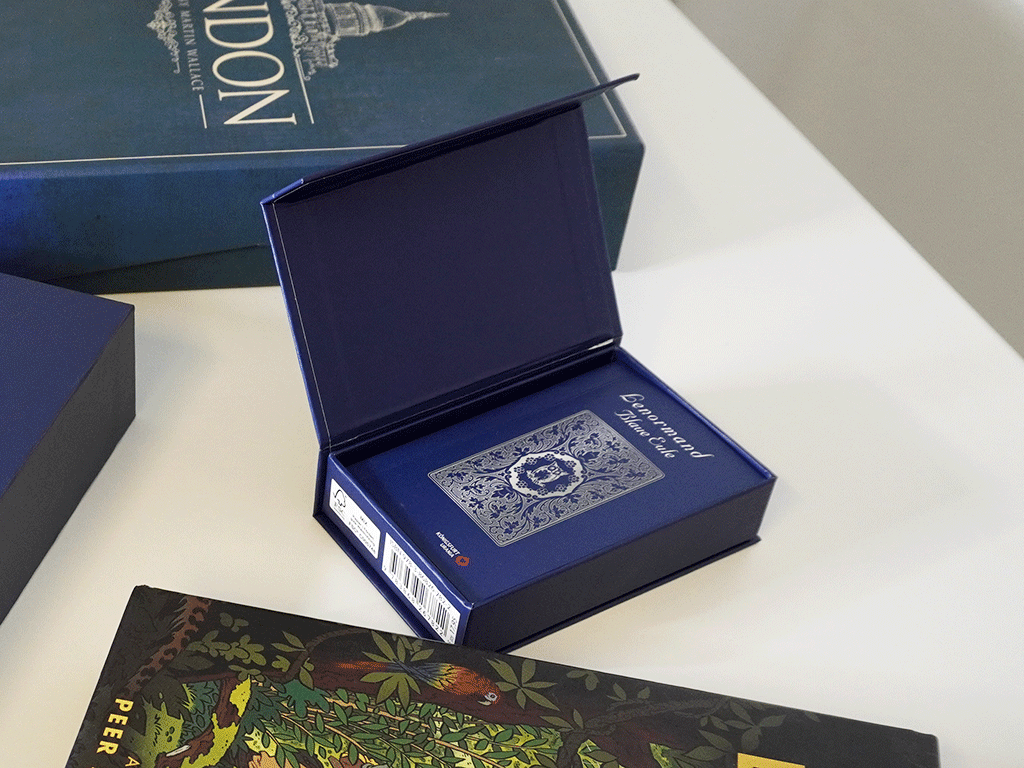
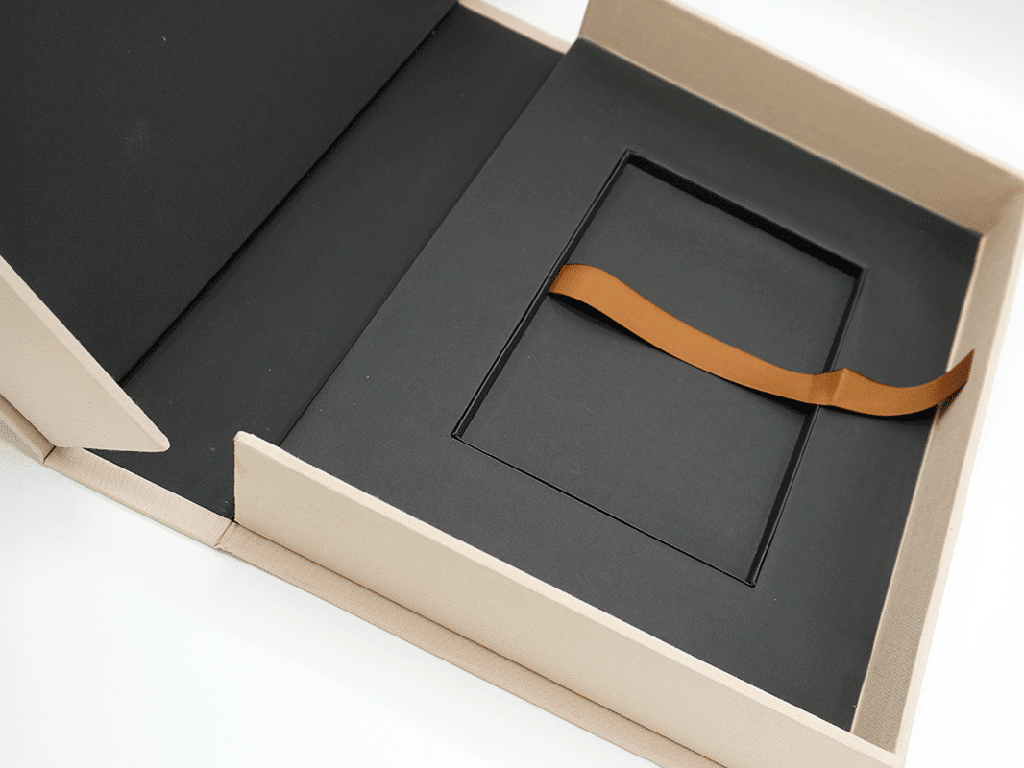
Hinged Rigid Box
This favourite for deluxe books and premium game sets is composed of a rigid box with the lid permanently attached along one edge. Satisfying, it feels like opening a treasure chest.
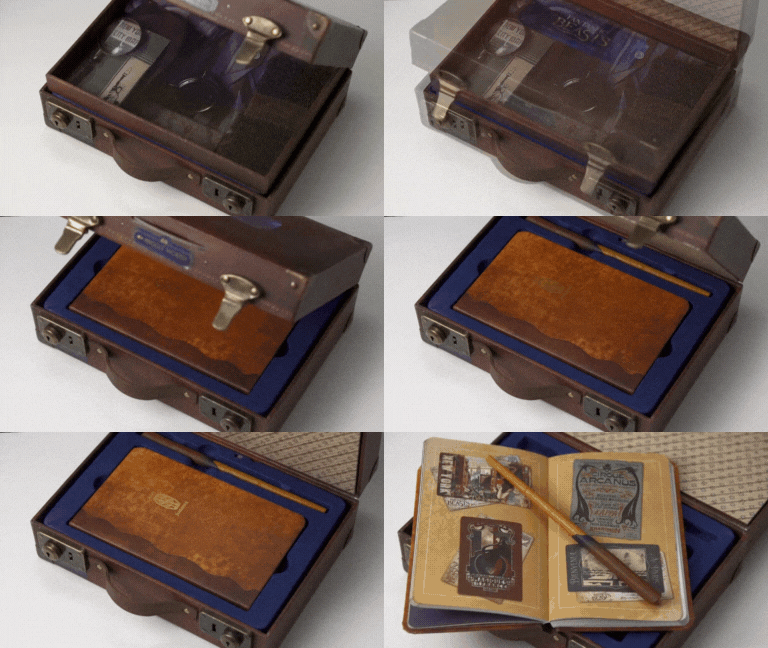
- Greyboard wrapped in printed or speciality paper
- Lid attached via paper or fabric hinge
- Optional magnetic closure or ribbon pull
- Secure closure without fully separating components
- Works well with EVA foam or moulded pulp fitments


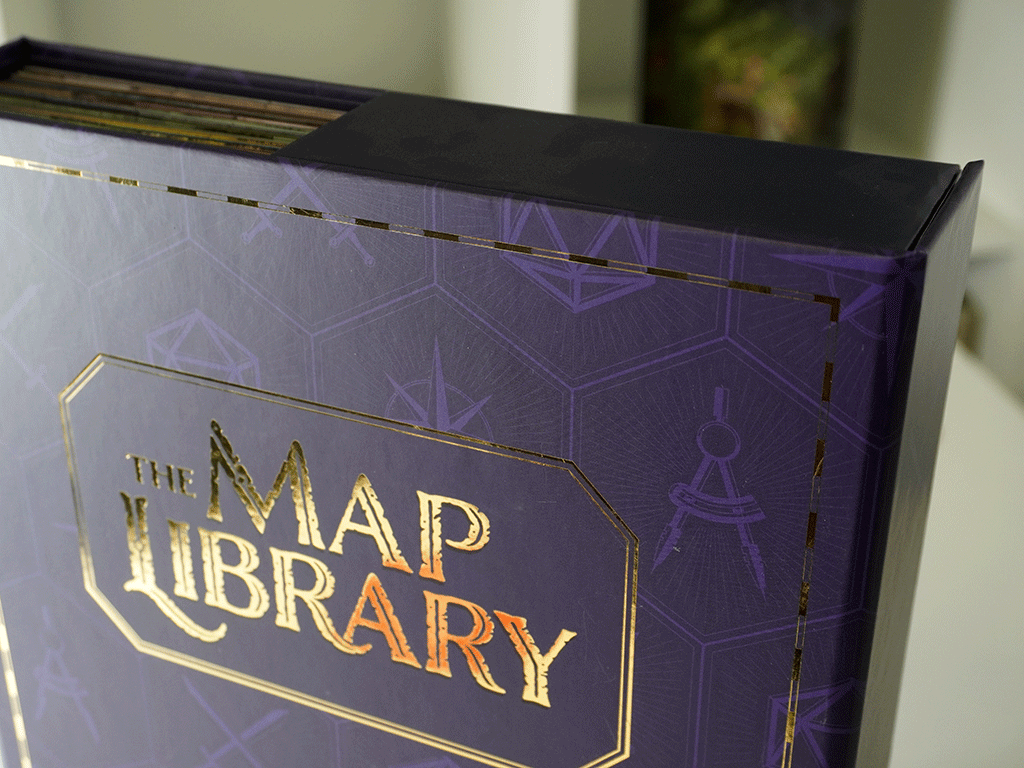
Wrap-Around Lid Box
A box with a lid that sweeps around the edges for a seamless look.
- Rigid greyboard, fully wrapped
- Lid can wrap three or four sides
- Compatible with ribbon pulls or internal tray.
- Smooth exterior surface, minimal seam visibility


Slipcases (Rigid & Soft)
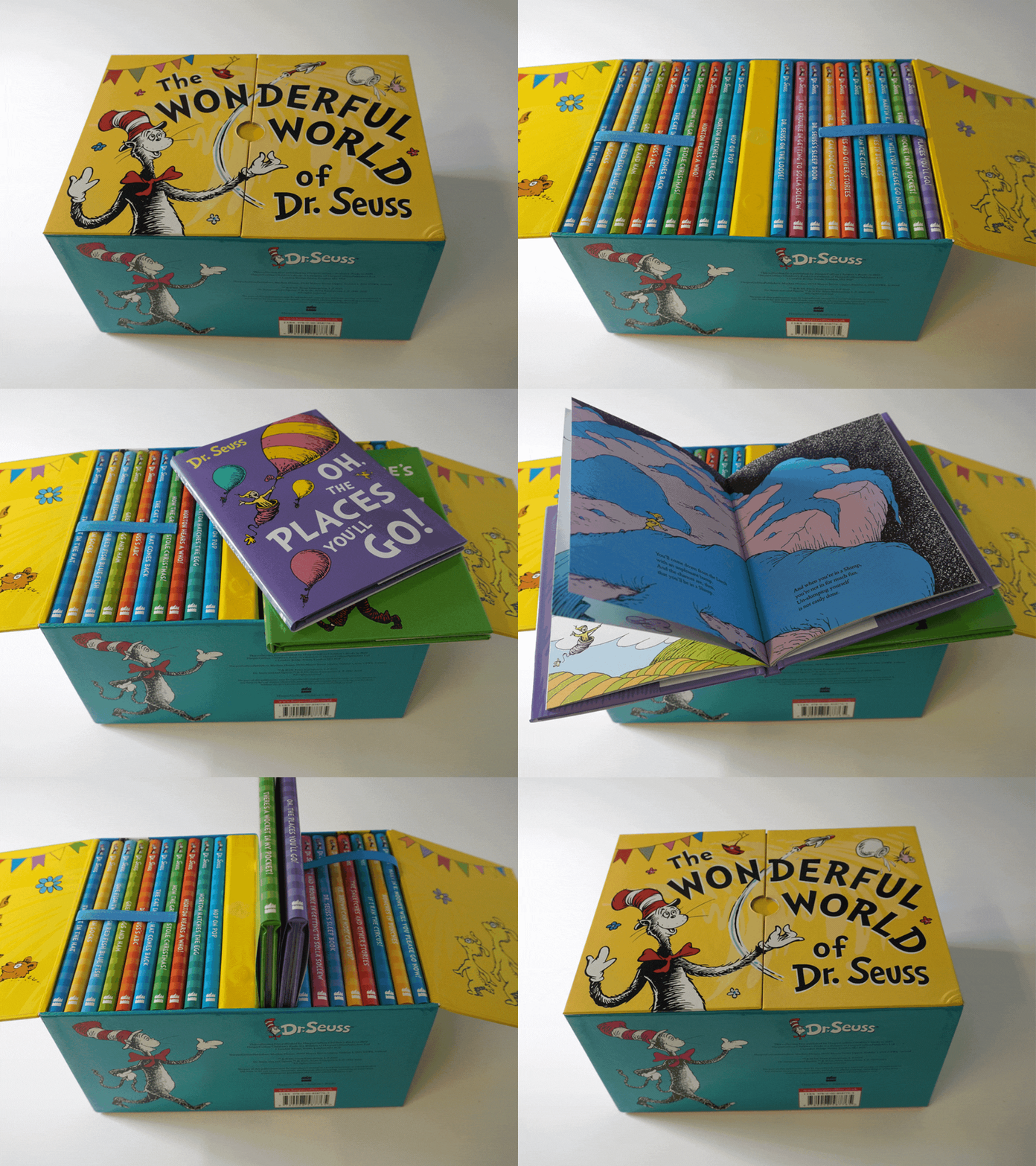
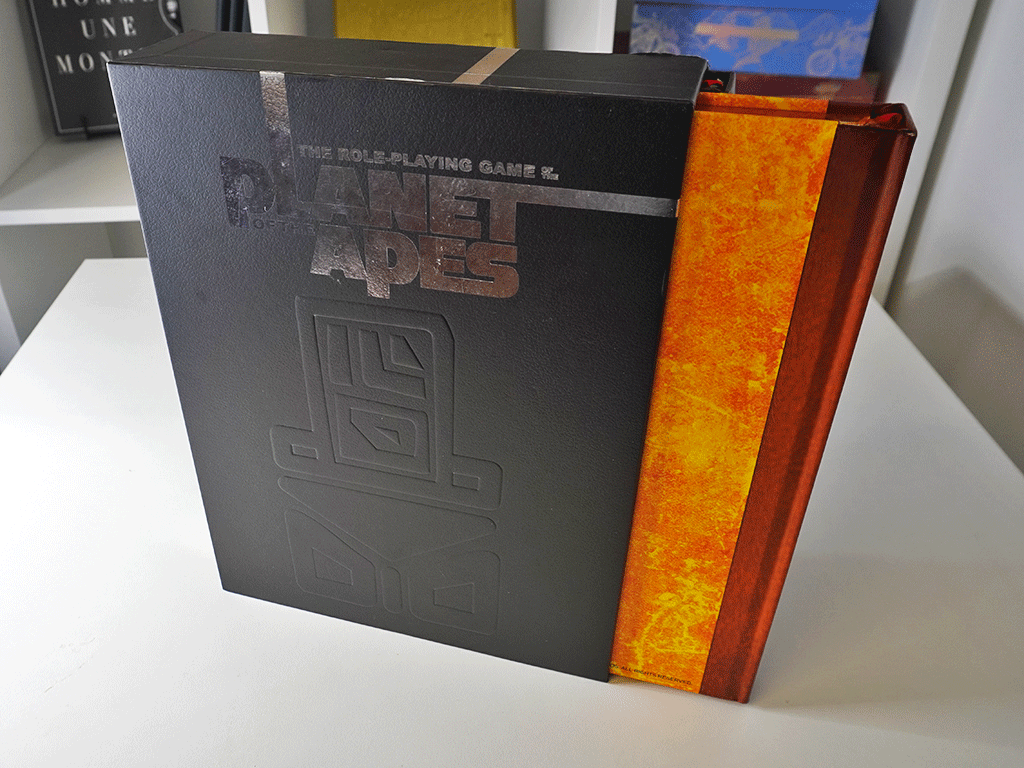
A go-to for special edition book sets as it protects the spine and corners of the books and allow branding to display on the shelves.

-
Rigid version: Greyboard wrapped in a cover material
-
Limp version: Made from C1S cardboard or heavy coated paper (e.g. gloss art paper)
- Optional thumb-cut or ribbon
- Protects book spines and corners
- Good stackability
- Outer panel offers large branding area


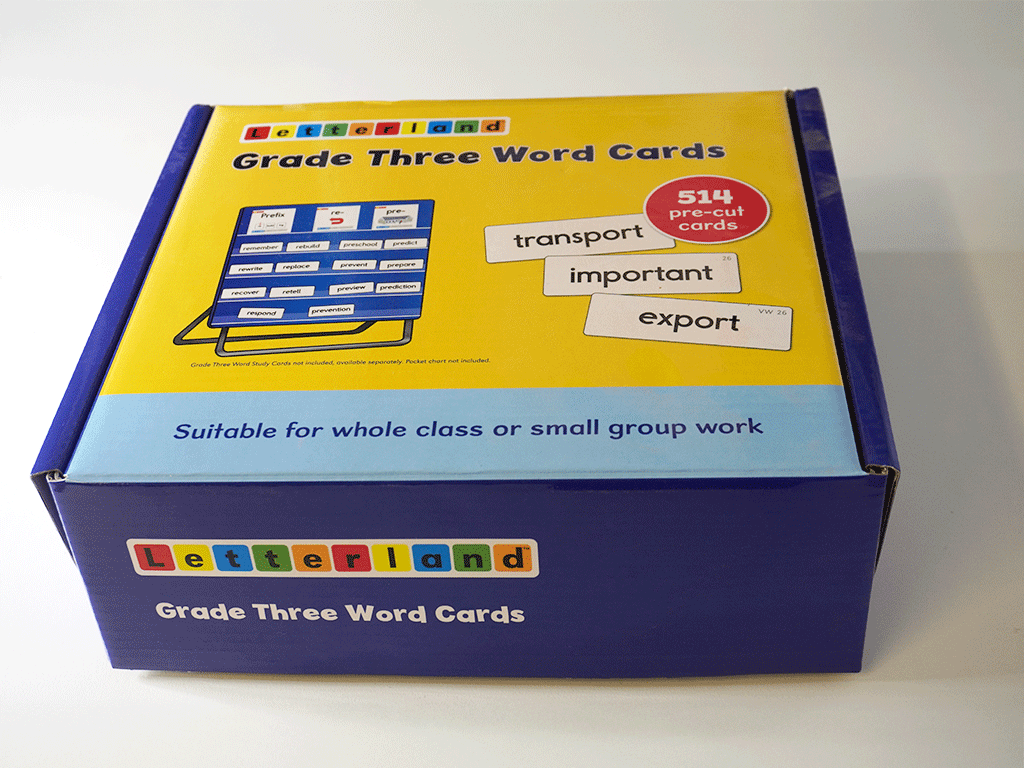
Pizza-Style / Mailer Box
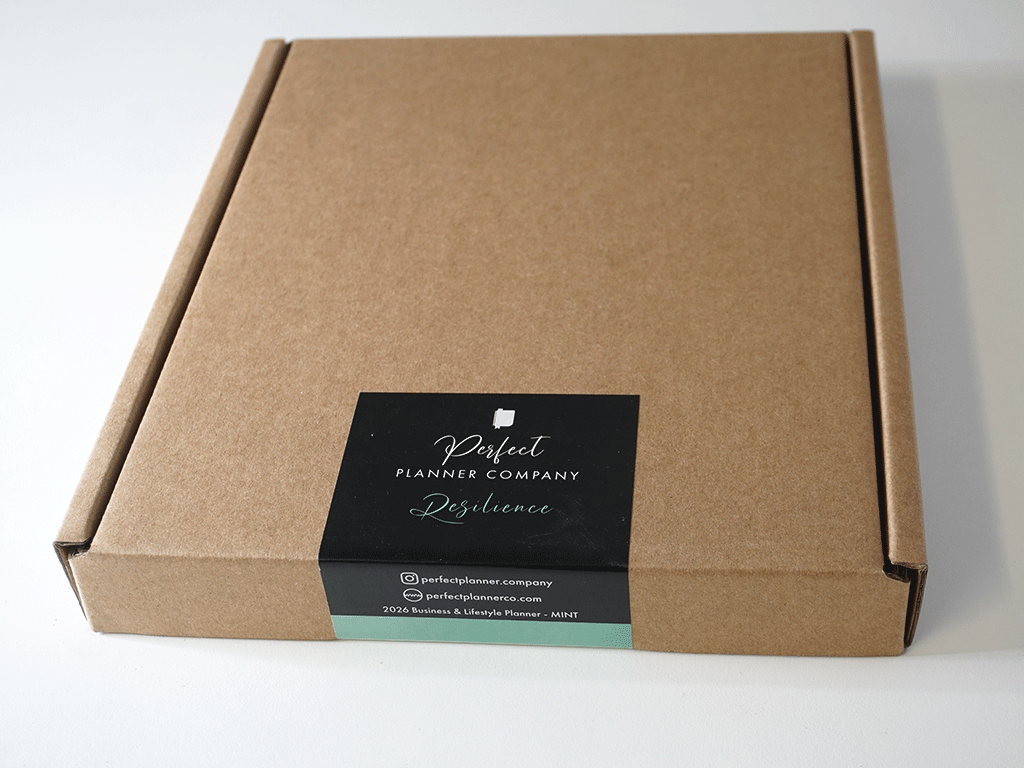
A single-piece corrugated box with a front tuck flap: similar to an ordinary pizza box, but engineered for product presentation.

-
Single-piece die-cut structure
-
Often coated white before printing
-
Can be gloss laminated for enhanced presentation
-
Can include bumpers (2 or 4) for extra product protection in special editions
-
Typically printed in 1 colour (often black) or white underlayer + CMYK
- Easy assembly and repeatable closing


Gift Boxes with a Window
A carton or rigid box with a transparent window to showcase the contents.
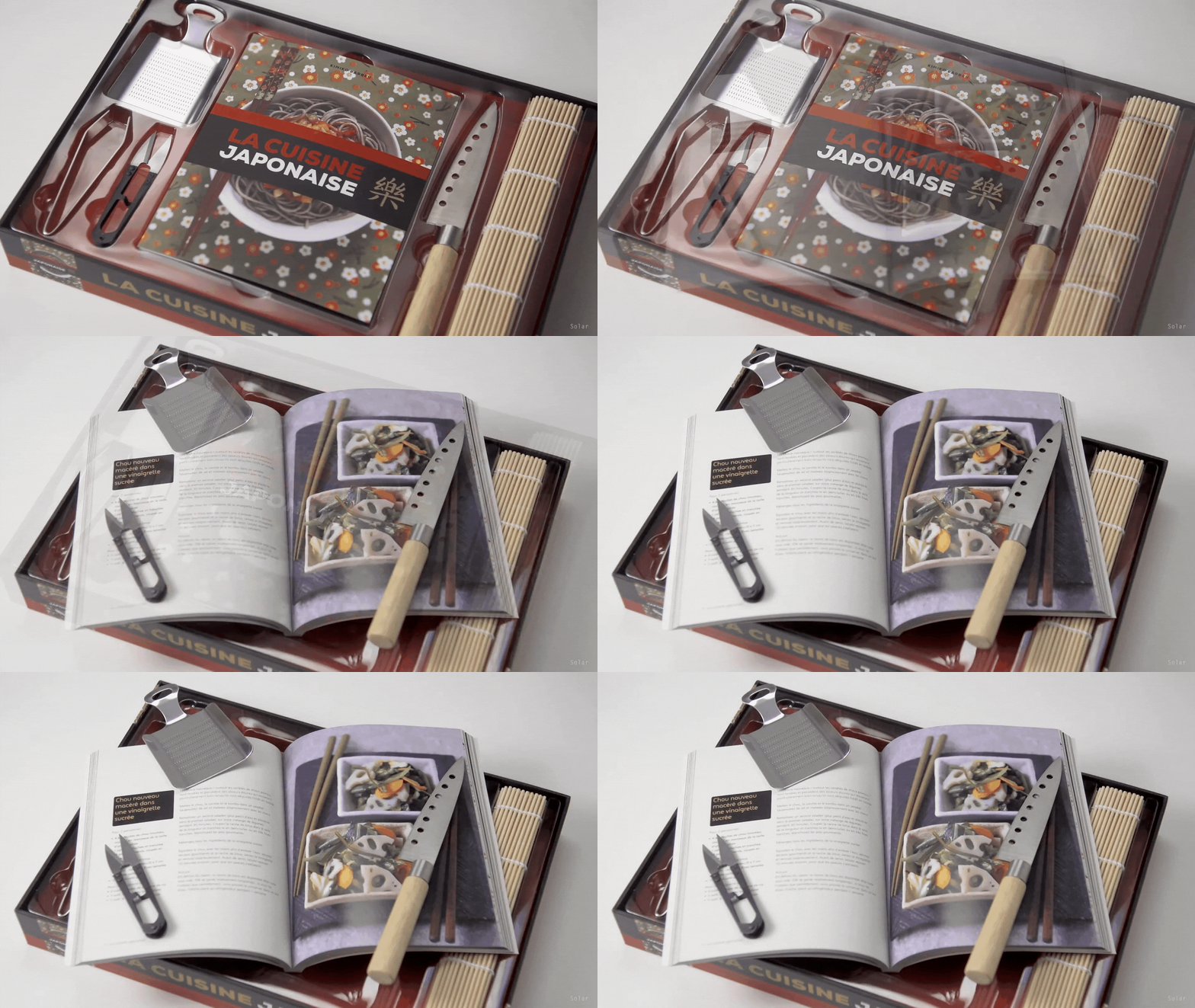
- Enhances visibility at retail
- Can ship flat (carton format) or pre-formed (rigid)
- Often used for stationery sets, special bundles, puzzles and gift lines.
- Folding carton or rigid board
- Window material: PET or recycled PET (RPET); plastic-free options available
- Optional inner fitments for presentation


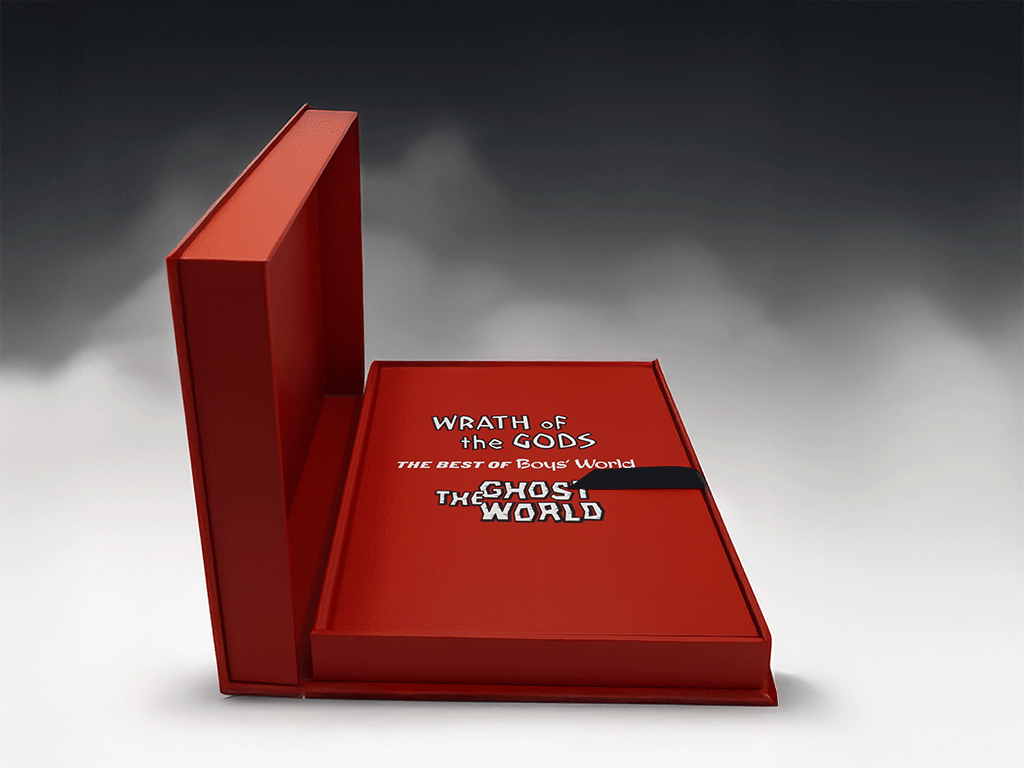
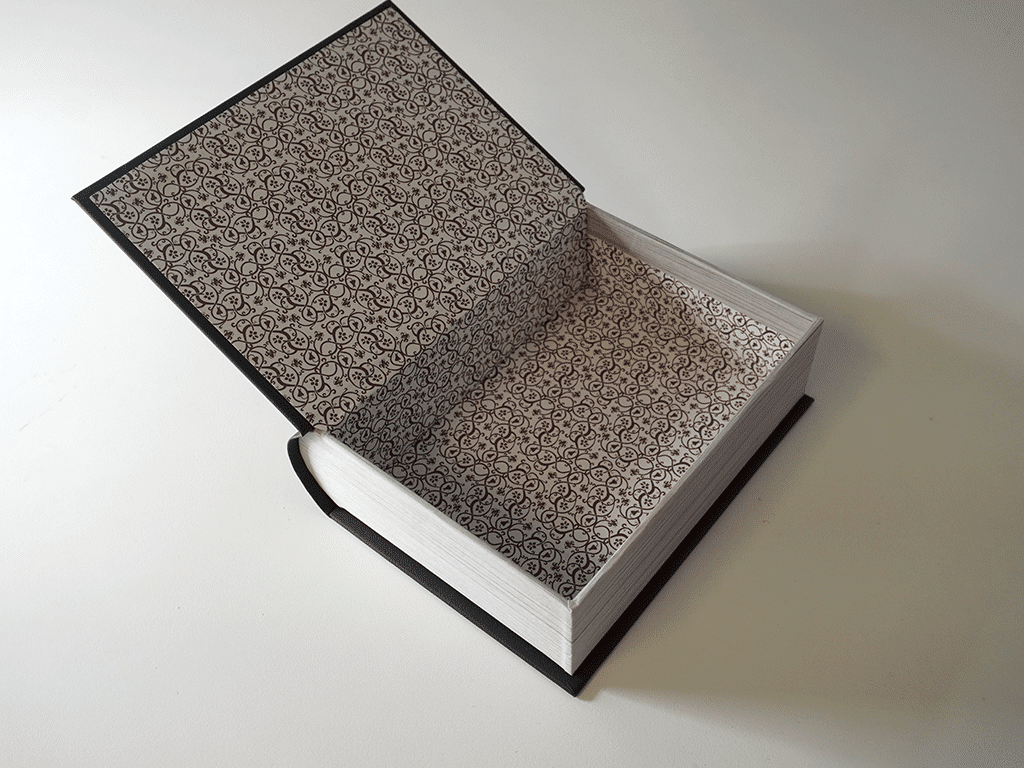
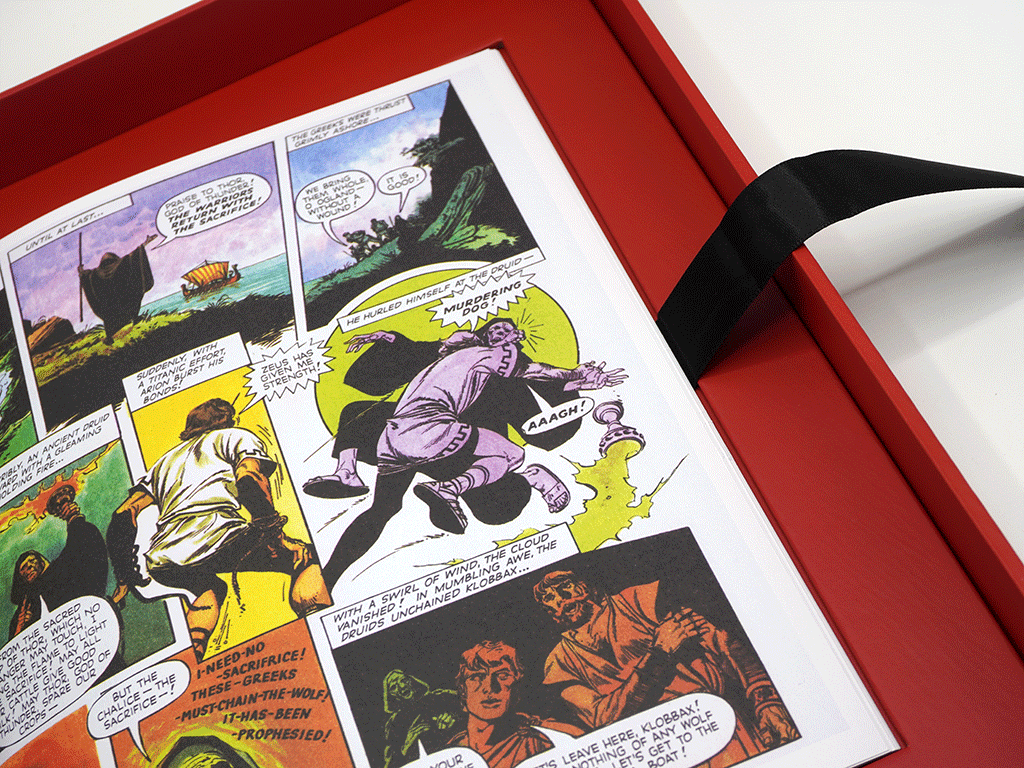
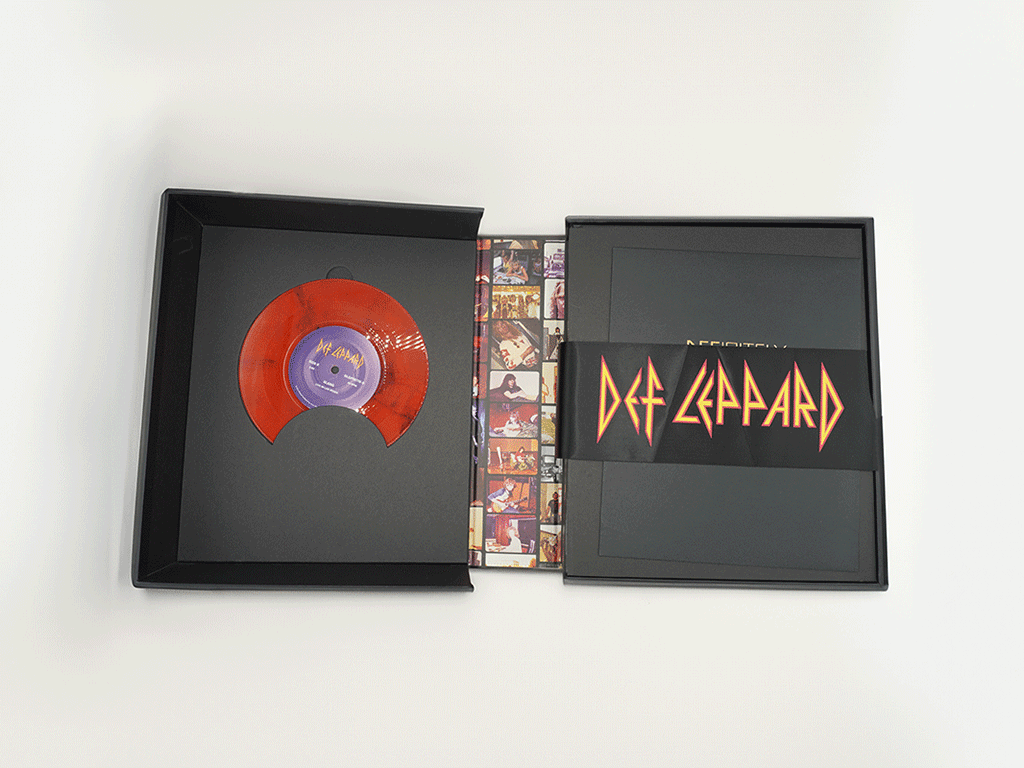
Clamshell Box
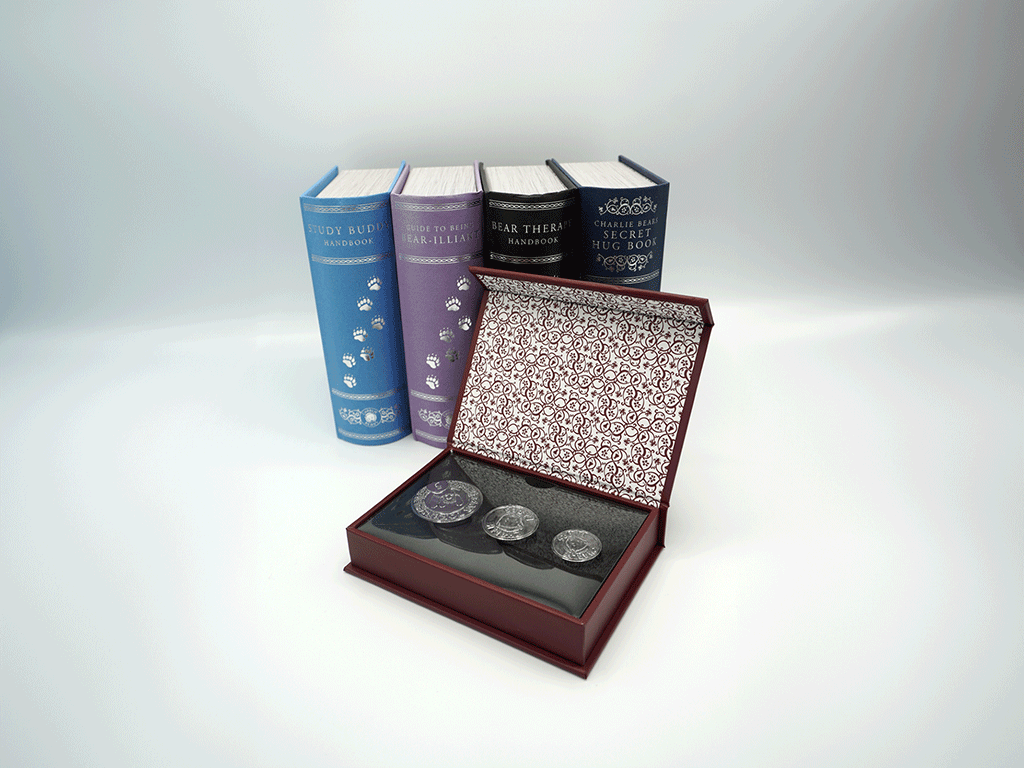
A rigid box with a spine, opening like a book, often with internal compartments for components or books.
- Greyboard, wrapped
- Base and lid mechanically linked via spine panel
- Optional magnet closure or ribbon lift system
Matchbox-Style Box
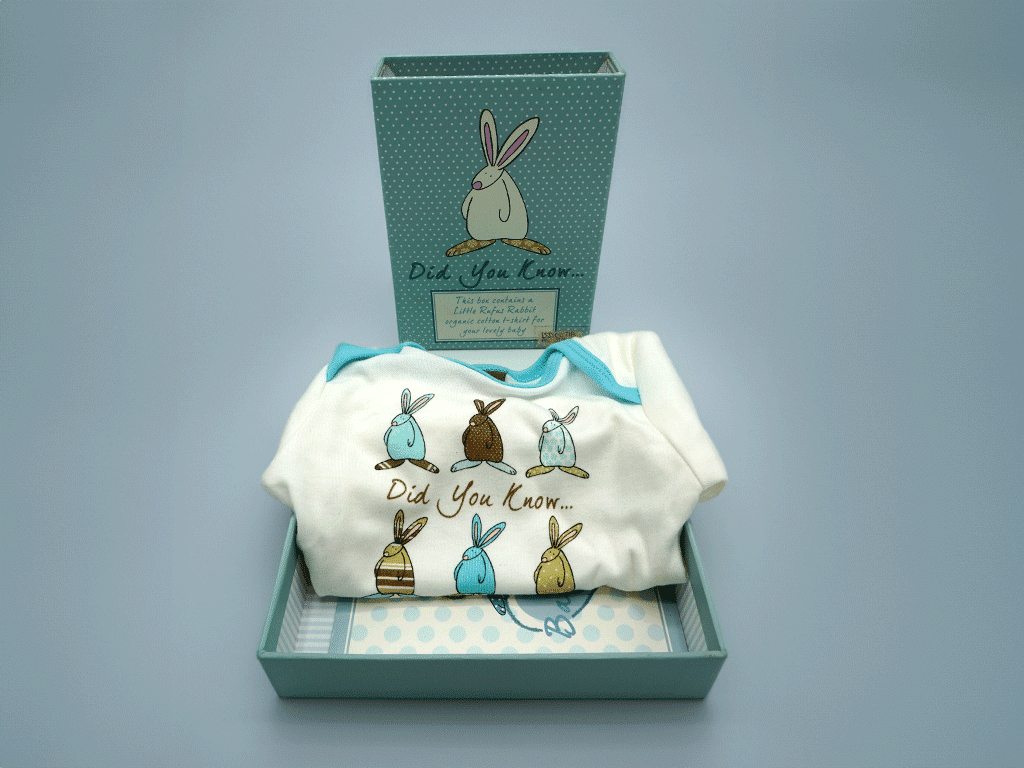
A sliding box composed of a sleeve and an inner tray.
-
Tray and sleeve work together as a unit
-
Smooth sliding opening motion


A box is the first moment of your product experience. The texture, the reveal, that little suspense when it opens… it all matters. The right box types protect what’s inside, tells your story, and sets the tone before your customer even sees the product.
The perfect box all depends on how you want people to feel, how the product will be used or stored, and the values behind your brand, including sustainable choices.
As you plan your next project, think about the opening moment, the materials, and how you want your audience to experience what’s inside.
Not sure where to start? We’re here to help you choose the right box for your next project.
Let’s create packaging that truly reflects your brand!

EUDR Update: What’s Changed for the Printing & Publishing Industry?
The EU Deforestation Regulation (EUDR) has recently been revised and updated. The due diligence requirements are now simpler, the deadlines have been extended, and for many printed products, the obligations are far less than originally required. Below, we break down the changes explaining what they mean for your print projects moving forward.
New EUDR Timelines:
The application dates for EUDR have officially been pushed back:
-
Large and medium operators: compliance now starts on 30 December 2026
-
Small operators: compliance starts on 30 June 2027
This extra time allows businesses to properly prepare their supply chains, work with suppliers, and put sensible processes in place, without rushing or disrupting production schedules.

Simplified Procedures:
One of the most positive developments is the simplification of due diligence requirements.
Here’s what’s changed:
-
Small operators can now submit a one-off Due Diligence Statement (DDS) instead of one per shipment.
-
The obligation to submit a DDS sits only with the first operator placing a product on the EU market or exporting it from the EU.
-
Downstream operators and traders simply need to collect and pass on the DDS reference number.
In short: fewer duplicate checks, clearer responsibilities, and less paperwork across the supply chain.
A further review is planned for April 2026, which could bring additional simplifications or clearer guidance.

EUDR Scope Update: What’s in and what’s out?
This is where the update has the biggest impact on the printing and publishing sector.
Out of Scope: Chapter 49 Printed Products
Products classified under Chapter 49 are now out of scope, including:
-
Printed books
-
Brochures
-
Magazines and periodicals
-
Calendars
-
Postcard books
-
Greetings card sets
-
Packaging that supports, protects, or carries another product
These are items that are defined by the information, expression or cultural value that they convey and the EU considers them to have minimal deforestation risk. For publishers and print buyers, this is a major change and removes a significant compliance concern for their finished printed goods.
Still In Scope: Chapter 48 Products
Some printed items are still covered under Chapter 48, such as:
- Diaries
- Notebooks
- Memo pads
- Wrapping paper
- Standalone packaging (like a gift box or bag sold on its own)
These are items that are defined as being paper products and the EU places them firmly in the category of ‘wood-derived products’ and in scope of EUDR.
The good news? If these products are made from 100% recycled materials, they’re exempt — so choosing recycled paper is an even smarter move now.
Paper and Pulp:
Even though finished printed products might be out of scope, paper and pulp (Chapters 47 and 48) are still very much in scope:
- EU mills producing pulp or paper for sale in EU or exporting from EU need to comply.
- Paper imported into Europe from ROW in sheets or rolls must comply.
- Paper merchants and printers purchasing paper in the EU must obtain and retain compliance information.
For now Chapter 49 products printed outside the EU – using non-EU paper and imported as finished goods – face no direct EUDR obligations. It will be interesting to see if this significant and unintended loophole remains intact.

How Imago Group Can help:
At Imago Group, we know EUDR can feel complicated, but it does not have to be stressful. We are here to guide you and make sure you stay on top of compliance while keeping your projects running smoothly.
Do you have an upcoming project?
Contact us today to discover how Imago Group can assist you in meeting your product safety requirements.
Kickstarter 101: How to Plan and Launch Successfully
You’ve got the idea. Now what? Maybe it’s a beautifully illustrated book, a clever board game, or a stationery line. Friends and family love it, but could Kickstarter help you bring it to life?
The short answer: yes, absolutely. The slightly longer answer: yes… but only if you plan it properly.
Imago Group have been helping creators, publishers, and brands produce everything from books and packaging to toys and games for over 45 years. We’ve seen the excitement that comes with a Kickstarter campaign and we’ve also seen the challenges that can catch people off guard. This guide shares the lessons we’ve learned so you can launch with confidence and deliver something you’re truly proud of.
Set Clear Goals
Kickstarter can be a way to:
- Test whether your idea resonates with a wider audience
- Build an early community of passionate fans
- Secure the funding you need for manufacturing. Your goal shapes your whole campaign. Are you aiming to launch a one-off collector’s edition? Or is this the first step toward a long-term brand? Being clear about your purpose makes every decision — from rewards to marketing — easier.
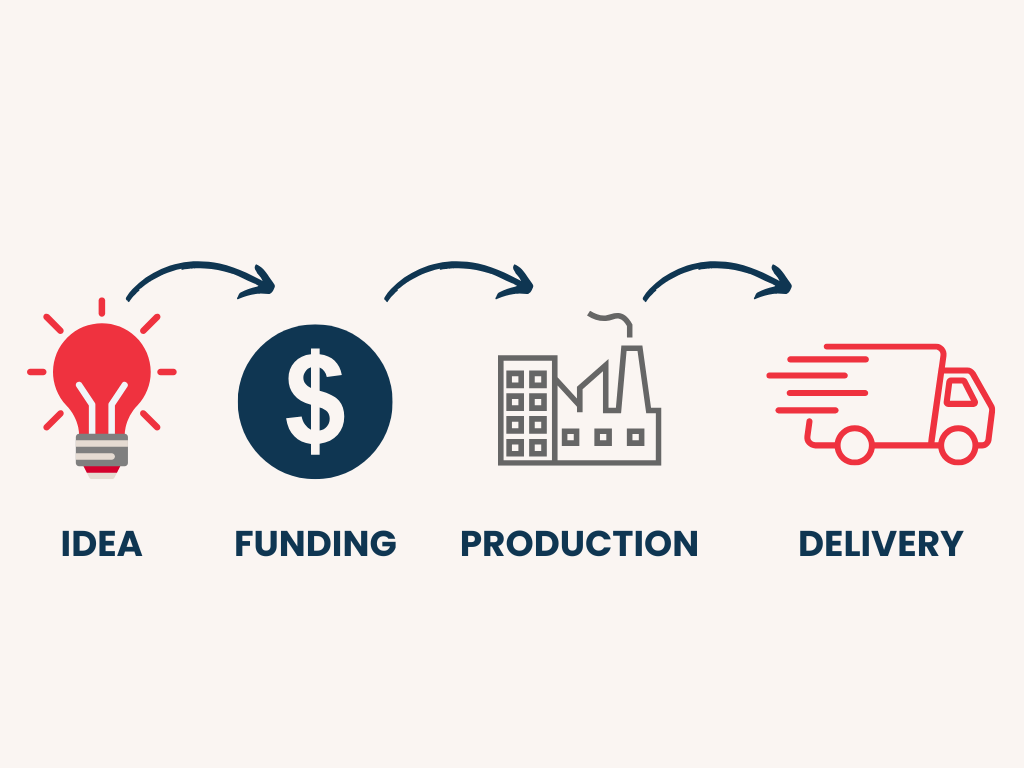
Tell Your Story
People don’t only back a product, they back creators. Share the story of how your game came to life during late-night playtests, or what inspired the illustrations in your book.
Equally important is the physical product itself. Backers want to know:
- What will it feel like to hold this book?
- How sturdy are the playing pieces?
- What’s the quality of the box they’ll proudly keep on their shelf? Mock-ups, prototypes, and sample finishes can make your story believable and build trust.

Budget Realistically
This is where many first-time creators stumble. It’s easy to calculate individual production cost— but manufacturing at scale is very different.
Don’t forget to account for:
- Design and prototyping
- Printing and packaging
- Shipping and logistics
- Safety testing (for toys and games)
- Taxes and platform fees
- Contingency for unexpected eventual costs
It is easy as a new Kickstarter creators to underestimate your budget. Getting flexible quotes for multiple reward options is tricky, especially without knowing exact backer choices, so working with a production partner early helps keep everything financially viable.
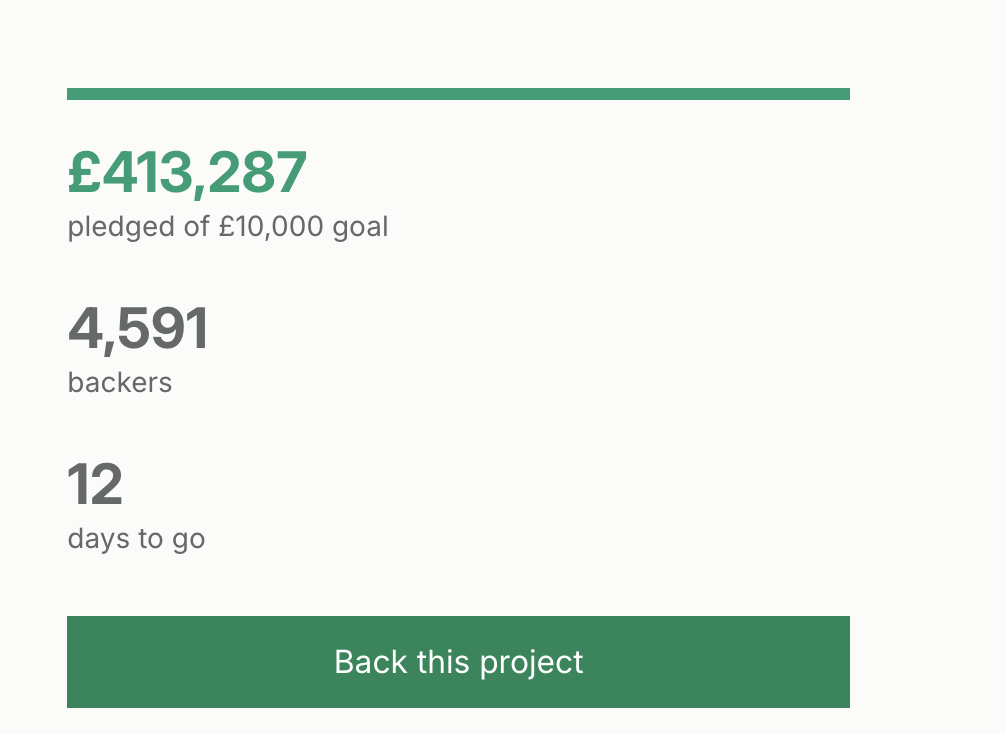
Show your Product
Think about what would convince you to back a project. Chances are, it’s not the idea but it’s seeing the product in action.
Photos, videos, and prototypes build confidence. Show your book on a coffee table, your puzzle in progress, or your toy in someone’s hand for scale. Simple but clear visuals help backers picture themselves owning the product.

Build Anticipation
Launching without an audience is like throwing a party and hoping people will show up. The most successful campaigns build anticipation in advance.
Here’s a simple pre-launch action plan:
- Share sneak peeks of illustrations, packaging ideas, or behind-the-scenes development
- Create a countdown to launch day across your social media platforms
- Build an email list of early fans and give them priority access when you go live
- Engage communities on social media groups related to your project
- Backers who are already excited before day one will give your campaign importance.

Keep Rewards Simple
It’s tempting to offer endless editions and extras, but every tier adds complexity to production and fulfilment. A successful formula is three or four tiers, such as:
- A standard edition
- A premium edition with special finishes
- A bundle option
This keeps things easy for backers to understand, and for you to deliver.
Don’t Forget Production
This is the step many creators underestimate. Once funded, you’ll have hundreds (or thousands) of backers waiting for delivery. That’s a huge responsibility.
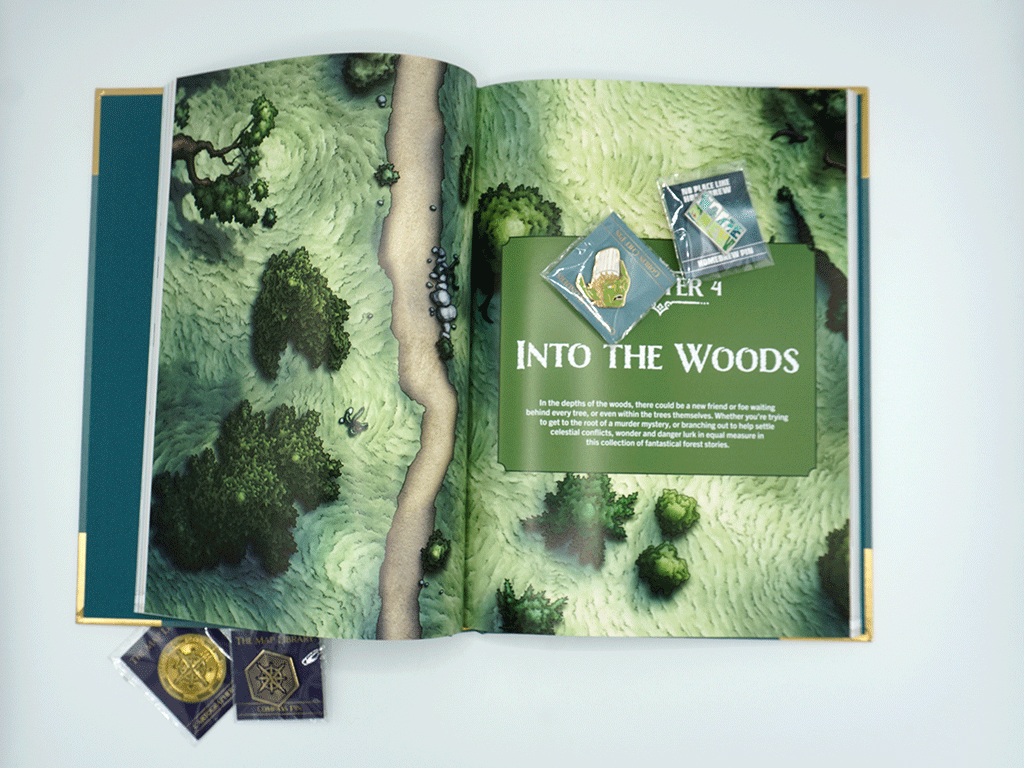
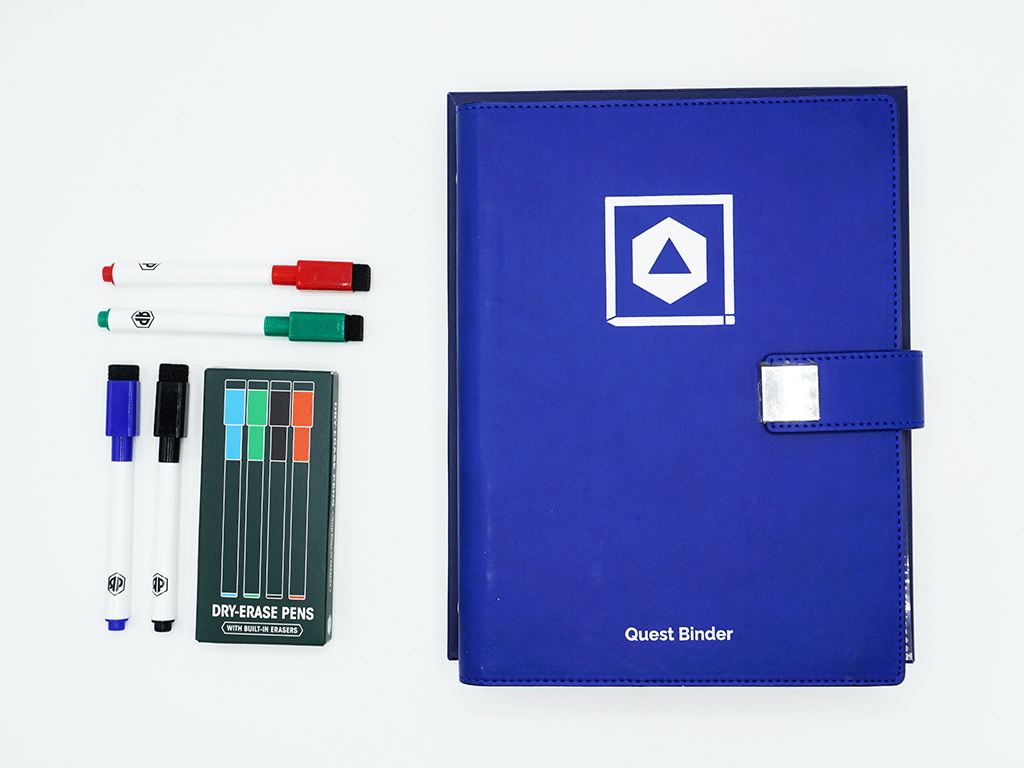
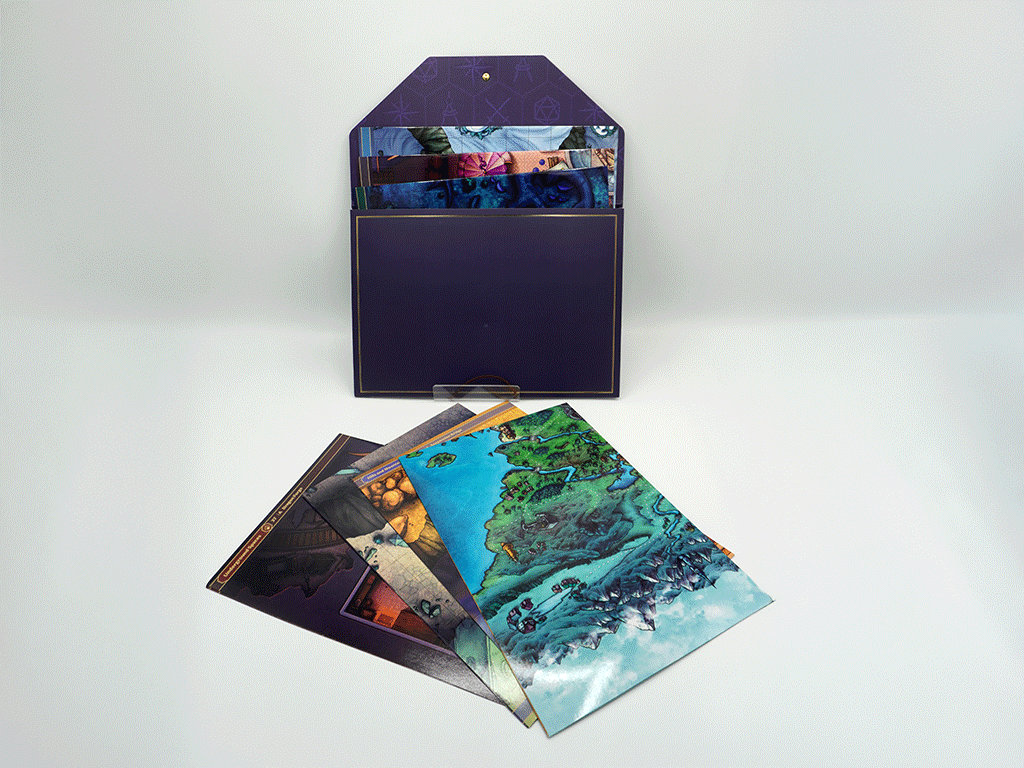
At Imago, we manage the entire production process for books, stationery, packaging, toys, and games. From print runs that look exactly as you envisioned to puzzles with perfectly fitting pieces, we handle the details so you can focus on your backers.
Keep the Communication with your Backers
Delays happen. Production takes time. What matters most is how you communicate. Backers love being part of the journey, so show them proofs, share behind-the-scenes updates, or let them know when the first pallets leave the factory. In our experience, a transparent creator with a delayed timeline keeps their community happy. A silent creator with a delayed timeline doesn’t.
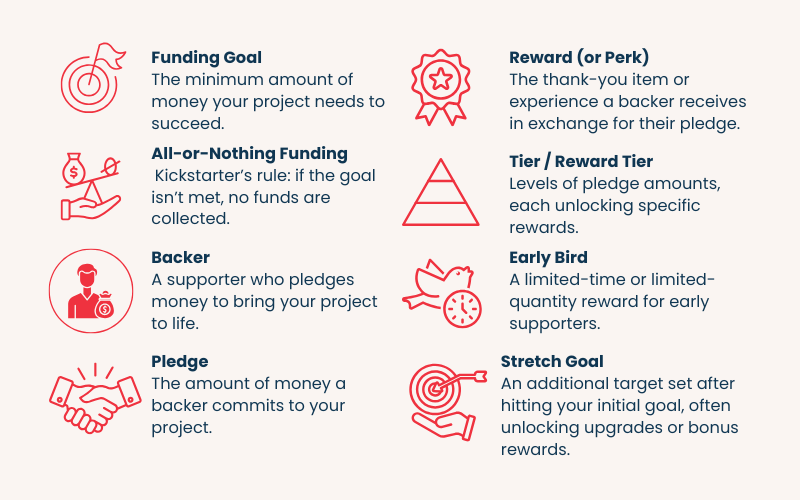
👉 Kickstarter can seem a bit intimidating, and it comes with its own set of terms that might feel confusing at first. To make things easier, here’s a quick glossary of the ones you’ll run into most often.
Final Thoughts
Kickstarter is an exciting project — there’s nothing quite like seeing people believe in your idea and rally behind it. But it can also come with a lot of stress if you’re not prepared. The truth is, getting your project from “funded” to “delivered” can feel overwhelming.
That’s why having the right people alongside you matters. At Imago, we love helping creators bridge that gap — turning a sketch, a prototype, or even just an idea into something tangible and beautifully made. So if you’re planning a Kickstarter, remember you don’t have to figure out the making part alone. We’re here to help make it real.
The 8 most common book binding techniques explained with real print examples
Choosing the right book binding type is one of the most important decisions in print production.
The binding you choose affects:
- Durability
- Cost
- User experience
- Overall product quality
In this guide, we break down the most common binding techniques used in professional printing — with clear explanations, comparisons, and real-world applications.
What are the main types of book binding techniques?
The most common book binding types are:
- Perfect binding
- Case binding (hardback)
- Flexibound binding
- Wire-O binding
- Spiral binding
- Saddle stitching
- Lay-flat binding
Each method is suited to different types of books and budgets.
Case Bound (Hardback)
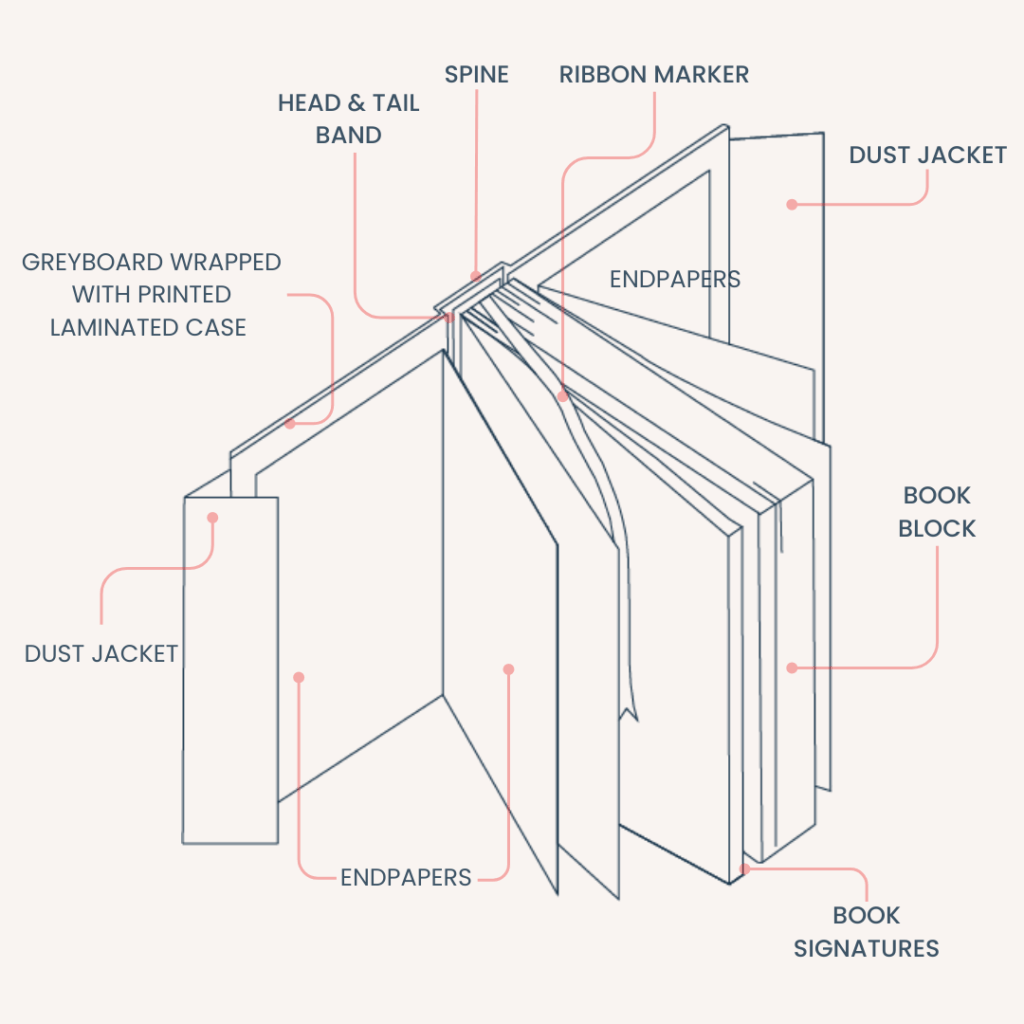
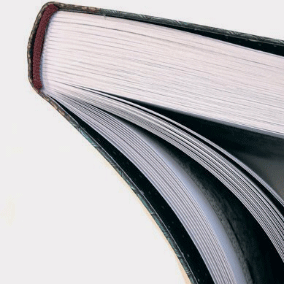
The king of book binding. Case bound books are sturdy, long-lasting, and always look premium. The folded sections are sewn, endpapers affixed and glued into a rigid grey board case which is then covered with a paper, cloth or leather / imitation leather cover.

Think coffee table books, luxury publications, or anything you want people to treasure (and proudly display). It’s not just a binding—it’s a statement


Wire-o Bound
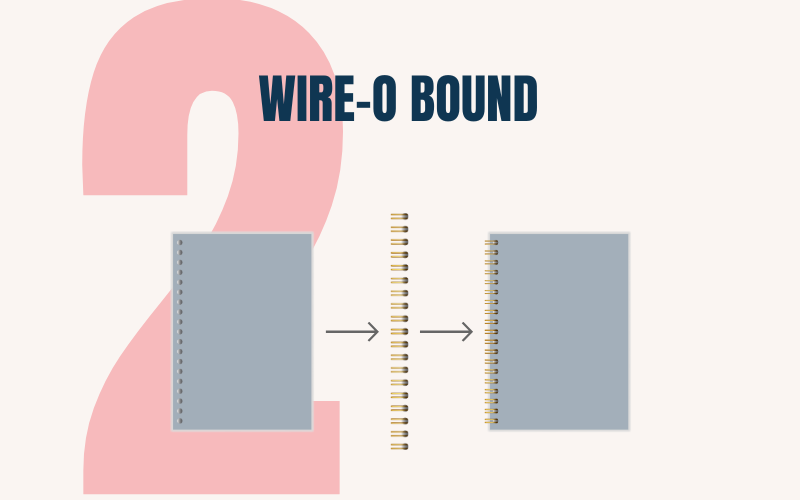
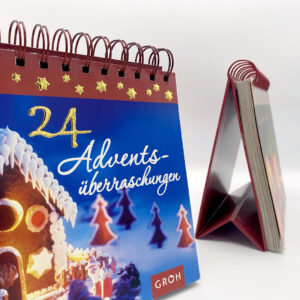
If you want something practical and easy to use, wire-o (or spiral binding) is perfect. The pages turn all the way around, so your book lays flat on a desk—ideal for calendars, recipe books, and notebooks. Plus, you can choose the wire-o or spiral colour to match your design.
Small detail, big impact . Covers can be cased or limp, spines exposed or concealed. So versatile!


Singer Sewn Binding
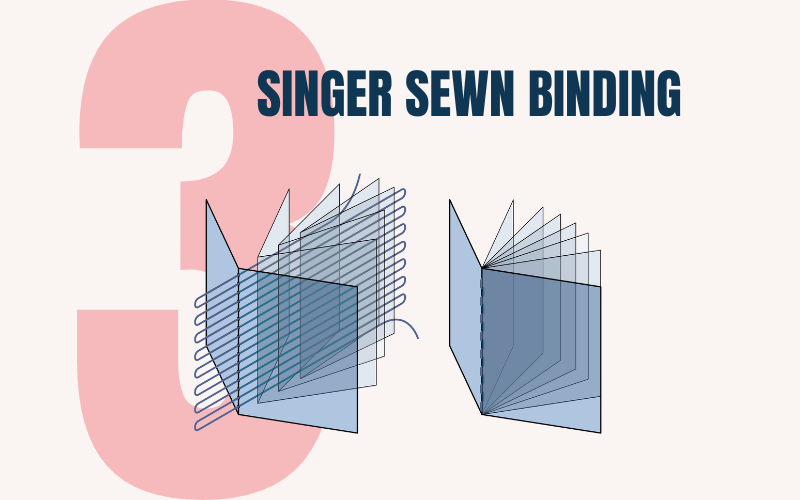
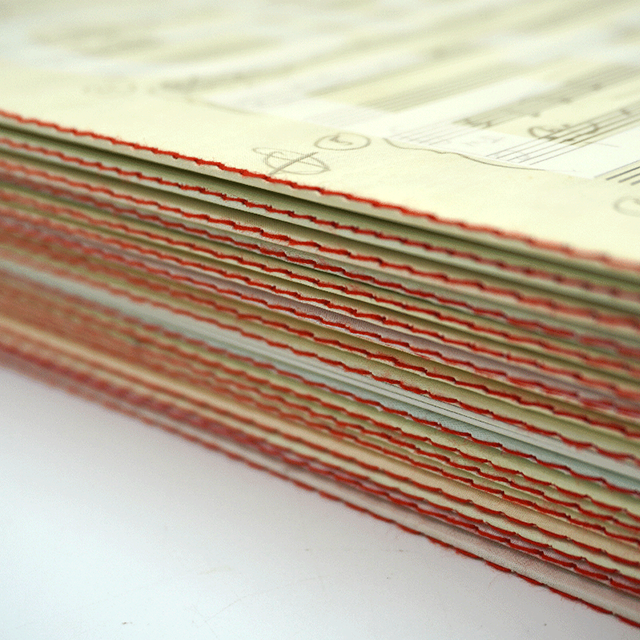
This one’s a little different. Instead of glue or staples, Singer Sewn Binding uses a continuous line of sewing along the spine. It looks creative and a bit crafty—in a good way.
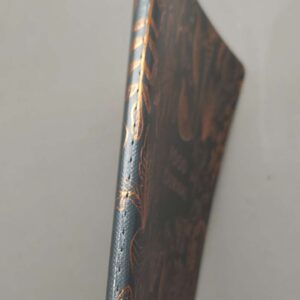
It’s often used for design-led projects like lookbooks or special brand brochures where the finish really matters. Use contrasting colour threads for an eye catching result.

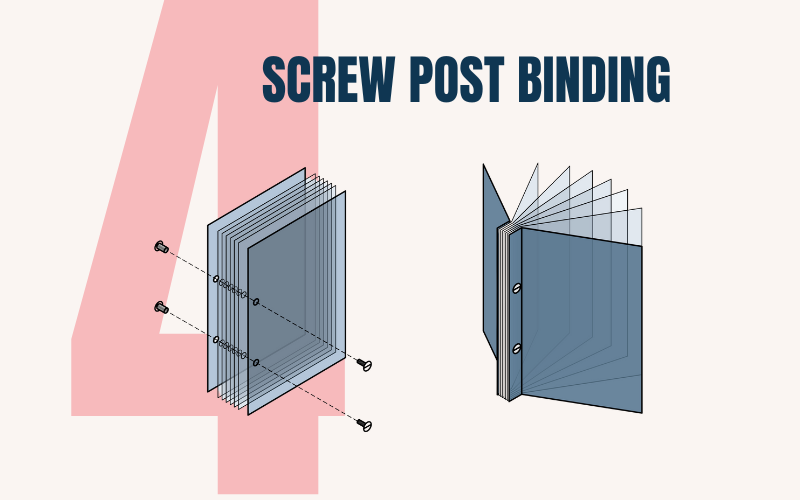
Screw Post Binding
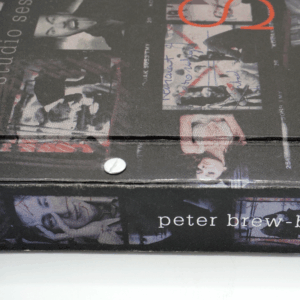
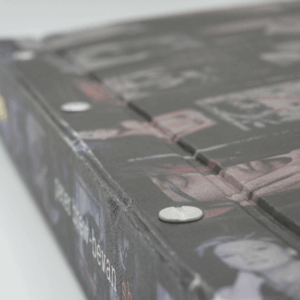
Strong, simple, and very handy. With screw post binding, the pages are drilled and held in place with metal posts. The clever bit? You can easily add or swap pages later. That makes it brilliant for portfolios, swatch books, or anything you need to update over time.

Perfect Bound (PUR binding)
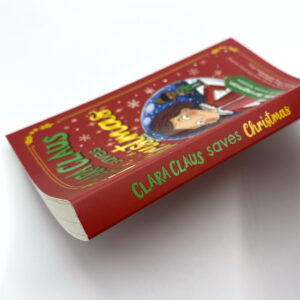
Chances are you’ve picked up hundreds of perfect bound books without even realising it. It’s the method most paperback novels, magazines, and catalogues use: pages glued into a wrap-around cover for a sleek, professional finish.

It looks good, feels good, and is cost effective. PUR binding is a superior form of perfect binding, PUR refers to the flexible polyurethane glue that is used.
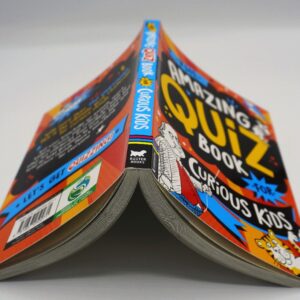
Saddle Stitch Binding (Wire stitched)
Quick, cost-effective, and reliable. Saddle stitching staples the pages together in a single section through the fold—perfect for slimmer projects like brochures, programmes, and booklets under about 64 pages. It’s straightforward and does the job beautifully.

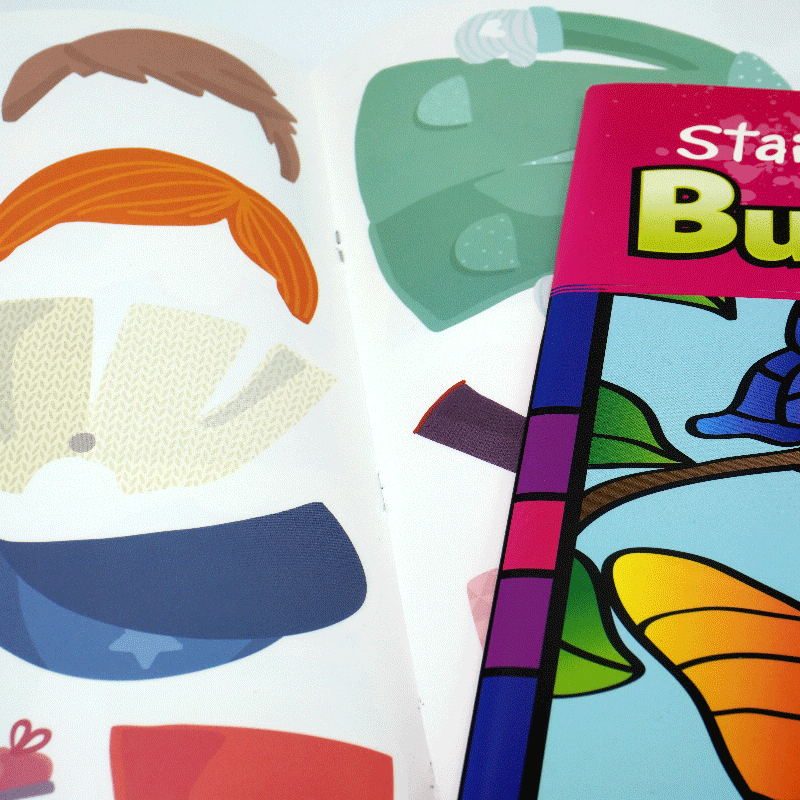


Flexibinding or Flexibound
One of the most popular choices for stationery and gift books. Flexibound books combine the good looks of a hardback with the supple feel of a paperback, giving you the best of both worlds at a cost somewhere in between.

Read more about Flexibound Books & Flexibinding here.


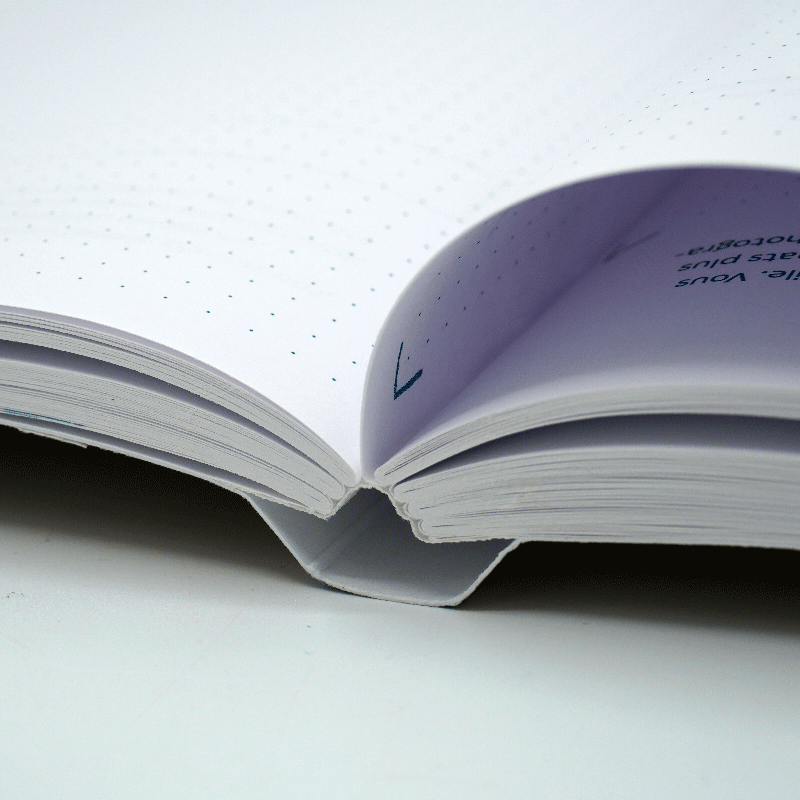
Lay Flat Binding (OTA Binding)
Lay-flat binding means your book stays open and flat on the table when opened. It’s brilliant for cookbooks, manuals, notebooks and other projects where hands-free reading is a must.
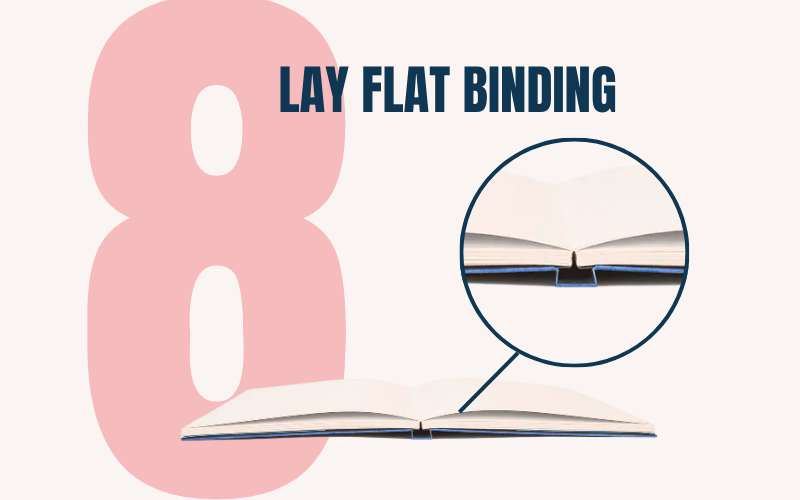
There are other ways of creating a paperback book which lies reasonably flat, but Ota binding is the real deal.


How to choose the best binding techniques for your project
Ask yourself:
- What is your budget?
- How many pages?
- Does it need to lie flat?
- Is it a premium product?
Example:
- Novel → Perfect binding
- Luxury book → Case binding
- Workbook → Wire-O
Choosing binding in professional print production
At Imago, binding is selected based on:
- End use of the product
- Distribution constraints
- Material compatibility
- Finishing techniques
The right binding is not just technical — it’s strategic
Need help choosing the right binding techniques?
Our team can guide you through the best binding options based on your product, budget and market.
👉 Start your project today and speak to our print experts

If you’re producing books, games, packaging, or calendars for the US market, you will have heard the news: big tariff changes were announced recently, and there’s been a lot of uncertainty.
The good news is that books, as “informational materials,” remain exempt worldwide. But other categories such as calendars, stationery, packaging, and games are directly affected and facing steep increases.
With freight traffic already surging, most importers are acting quickly to secure shipments while this window remains open.
Latest Updates
February 20, 2026
On Feb 20, Friday morning, the US Supreme Court ruled that Trump’s International Emergency Powers Act (‘IEEPA’) tariffs violated federal law. The court determined he had exceeded his authority in imposing the levies. By Friday afternoon, Trump said he would reimpose the tariffs under Section 122 of the 1974 Trade Act.
Trump also said he is preparing to new actions to expand the use of Section 301 and that his administration would open further investigations into other countries’ unfair trade practices, a mechanism through which Trump could build a new wave of tariffs.
Section 122 authorises the U.S. President to impose temporary (up to 150 days) import surcharges of up to a maximum 15%, it goes into effect February 24th at 12:01PM.
The effective tariff rate on China is now 15%, previously 20% under IEEPA.
The effective tariff rate on Malaysia is now 15%, previously 19% under IEEPA.
The effective tariff rate on Vietnam is now 15%, previously 20% under IEEPA.
The effective tariff rate on India is now 15%, previously 20% under IEEPA.
The effective tariff rate on Turkey and the EU remains 15%
The effective tariff rate on Colombia is now 15%, previously 10% under IEEPA.
There are some goods not subject to the import duty. Informational material (ie, Chapter 49) is still exempt.
Chapter 48 (stationery, journals, planners, notepads, empty box packaging), Chapter 9500 (Puzzles, playing cards, board games) are subject to Section 122 15% tariff. This is in addition to Chapter 48’s existing Section 301 tariff of 25% making this a total of 40%.
Refunding the billions of dollars in duties collected by the United States remains up in the air.
The de minimis exemption, a policy that allowed low-value imports worth under $800 to enter the United States duty-free, remains closed. Tariffs will apply to small parcels and consignments.
What’s been happening with US Trade Tariffs on Print Production?
- On April 9th, 2025, the US introduced new US trade tariffs that target various goods, including products related to print production.
- On May 12th 2025, a 90-day suspension on the most extreme recent tariffs has been announced. A new 30% base tariff is now in place during this pause period.
- As of May 28th, there has been a major change regarding US tariffs following a decision by the US Court of International Trade, which ruled that President Trump lacked the legal authority under the International Emergency Economic Powers Act (IEEPA) of 1977 to enact a sweeping series of trade penalties. The ruling voids many of the tariffs except for those that weren’t done under the Act, for example, cars and steel which were Section 232.
- The late afternoon May 29th update to this is that the Court of Appeals for the Federal Circuit has today issued a temporary stay of the decision pending further proceedings. So, for now, there is no change to the current tariffs being collected and the tariff rates remain as set out in our blog below. We don’t know how long the appeal process will be and if it works its way up to the Supreme Court for a final decision, but for now there is no change
- June 11, 2025: A deal was announced between the US and China following talks in London. While no formal written statement has been released, officials confirmed a total 55% tariff on certain Chinese imports:
- 20% fentanyl-linked tariff
- 10% reciprocal tariff
- 25% Section 301 tariffs from 2018 (unchanged)
The Trump administration says that it plans to appeal the decision. We will update this page with the specific rates, as well as how tariffs will be handled pending appeal, as soon as we know more.
The new tariffs are imposed under the IEEPA*, granting the US President emergency trade powers, but books are protected as “informational materials” and mostly exempt from these additional charges.
Here’s what we believe to be the current breakdown based on product type and tariff chapter:
Books – chapter 49
- From China:
- General books (like novels, textbooks, etc.): 7.5% tariff under Section 301 (no new 30% IEEPA* tariff on top)
- Children’s picture books and religious books: 0% (still exempt)
- Calendars: Not exempt under Annex III = 30% + 7.5% = 37.5%
- From anywhere else:
- Calendars: 10%
- Other books: 0%
Most books remain relatively unaffected but calendars, which fall under the same chapter, are not exempt from the new charges.


Stationery & Packaging – chapter 48
- From China:
- 30% new IEEPA* tariff
- Section 301 tariff: 25%
- Total cumulative tariff: 55%
➤ This is one of the hardest-hit categories. If your packaging is currently sourced from China, you might want to review costs and timelines.
- From other countries: 10%
- From Mexico: 0% (if made with North American-sourced paper).
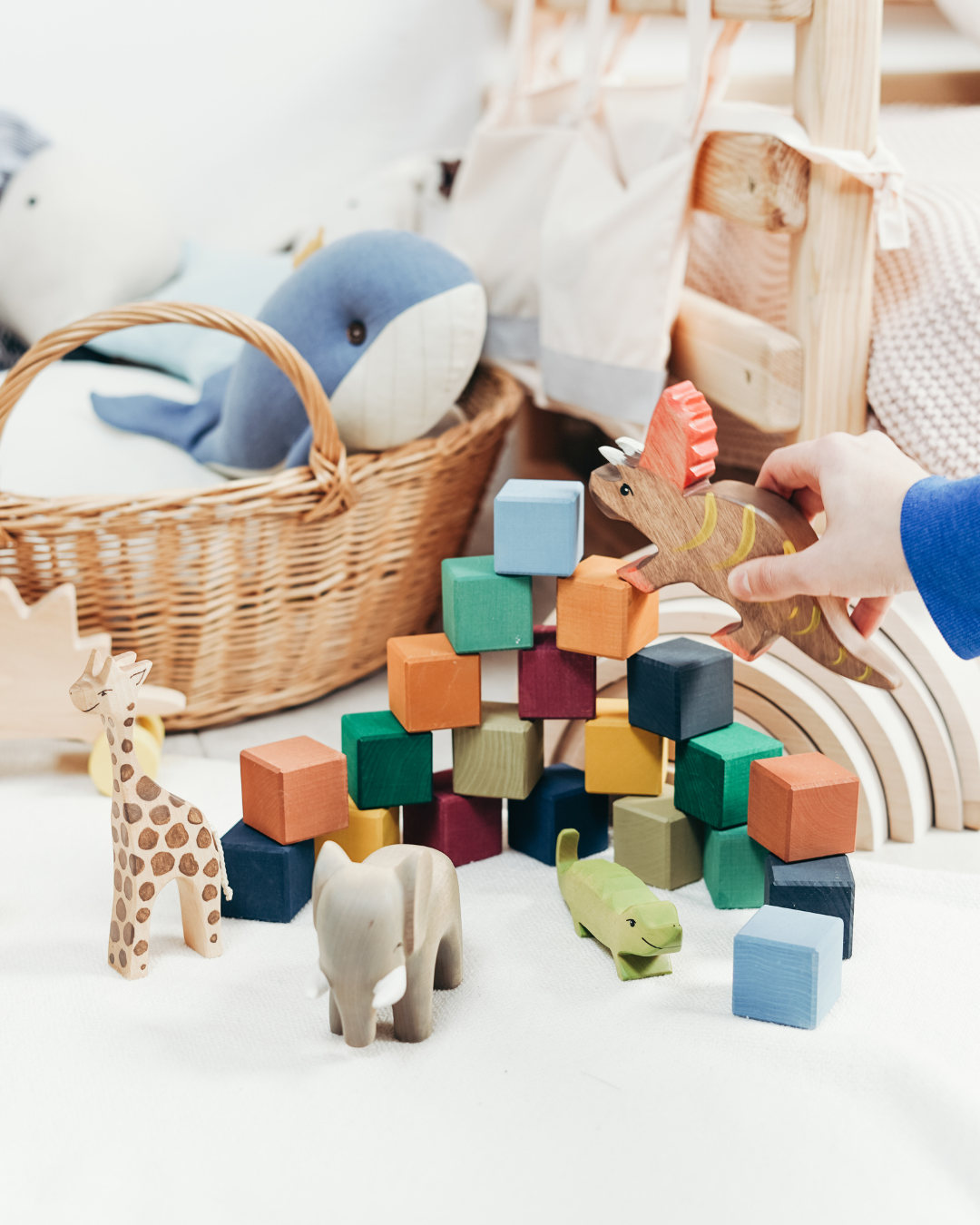
Games & Toys (includes jigsaws, board games, puzzles, and playing cards) – chapter 95
- From China:
- 30% total tariff (during 90-day pause)
➤ It’s not the 145% we feared, but it’s still a significant jump. If you’re producing in volume, that 30% adds up fast.
- From other countries: 10%
- From Mexico: 0% if USMCA**-compliant
-
*IEEPA (International Emergency Economic Powers Act):
The IEEPA is a law that grants the President of the United States the power to regulate international commerce during national emergencies. Tariffs under the IEEPA, such as those imposed on Chinese imports, are part of an economic response strategy to address perceived threats to U.S. interests, often in the context of national security or trade imbalances. -
**USMCA (United States–Mexico–Canada Agreement):
The USMCA is a trade agreement between the U.S., Mexico, and Canada that replaced the North American Free Trade Agreement (NAFTA). It includes provisions for tariff-free trade on qualifying goods, provided they meet specific rules of origin requirements, such as the use of North American-sourced materials.

What should you do?
Shipping lines are already reporting a surge in traffic from China, many held-back shipments are now being rushed through during this 90-day window.
💡 Our advice?
-
Book shipments early to avoid delays or rising freight rates.
-
Check product classification codes carefully.
-
Contact us to explore our non-China sourcing to minimise risk or costs.
While there is talk of extending this pause as negotiations continue, there’s no guarantee. If you’re planning a project, now is the time to act.
Need more advice? Let’s talk.
We’re closely monitoring these changes and will continue to keep you informed. If you’re unsure how the US trade tariffs on print production will impact your projects, don’t hesitate to reach out. Imago Group is here to support you in keeping your production on track and budget-friendly.
Do you have an upcoming project?
Contact us today to discover how Imago Group can assist you in meeting your requirements and budget criterias.
Foil Blocking Techniques: Your Guide to Hot, Cold and Digital foiling
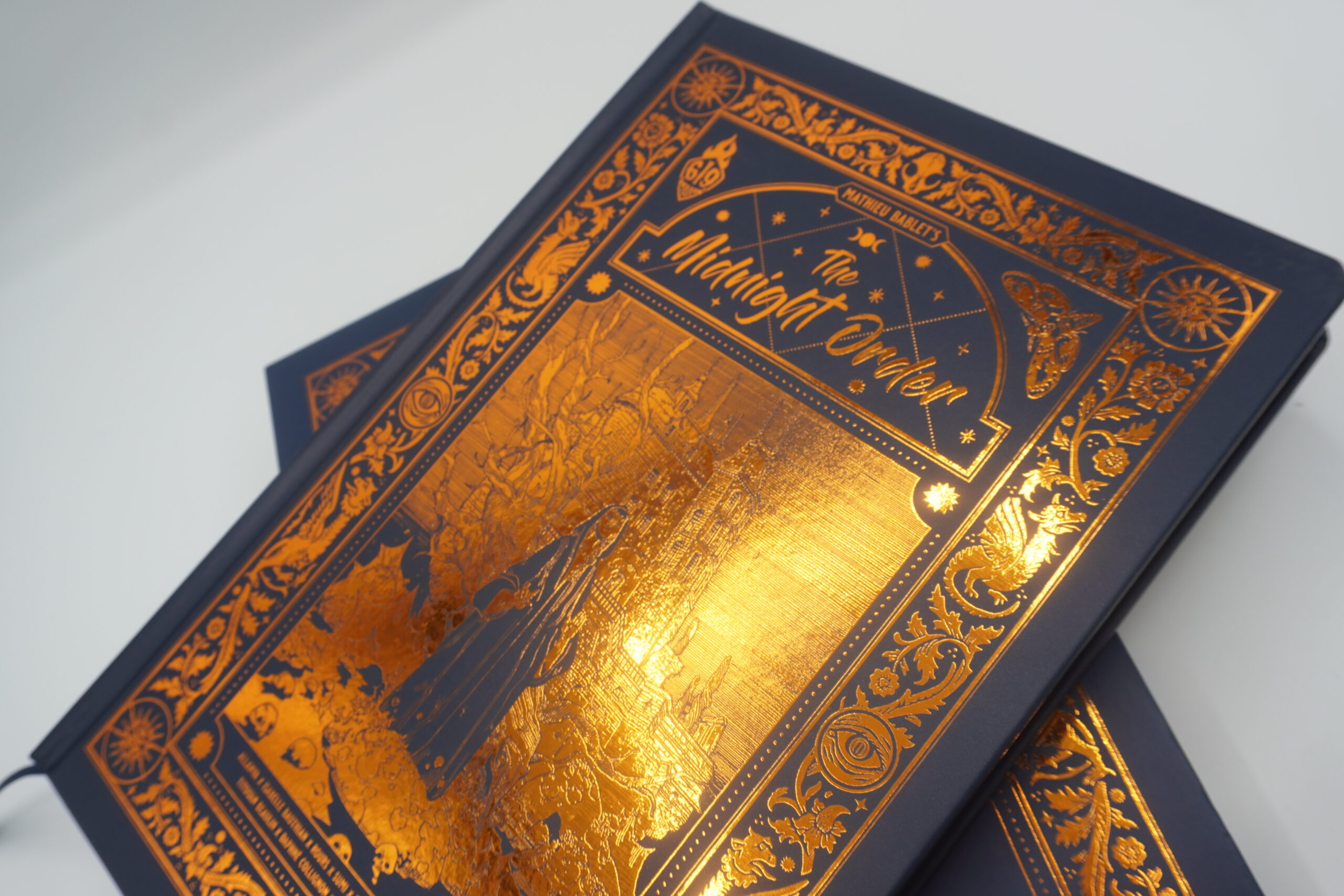
Foil blocking is one of the most visually striking finishes in commercial and book printing, but did you know there are several different ways to achieve the foiling effect? In this blog, we’ll take a look at the different types of foiling, from traditional foil blocking (or hot stamping) to cold foil and the relative new kid on the block – digital foiling. We’ll look at how they differ and what they can be used for.
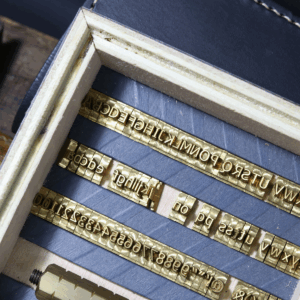
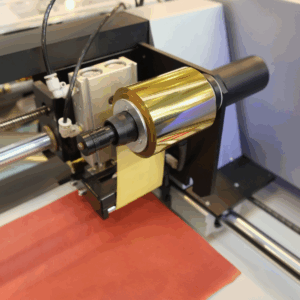
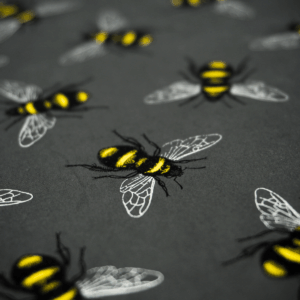
Foil blocking is a decorative printing technique that applies metallic or pigmented foil to a surface using heat, pressure, or adhesive. There are three main methods of foil blocking, each with its own advantages and ideal use cases:
Hot Foil Stamping
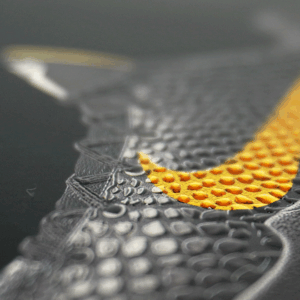
- A heated metal die (brass or aluminium) presses foil from a roll onto the substrate. Brasses can be flat or engraved deeply for an emboss, deboss or multi-level effect
- The heat activates the adhesive on the foil, bonding it to the surface.
Materials: Paper, leather, PU, and imitation cloth and real cloth.
Pros:
- High-quality finish, good level of detail.
- Long-lasting and durable.
- Widely selection of foils and effects available.
- Many printers have in house.
Cons:
- Requires custom dies so involves higher setup cost).
- Not ideal for short runs or variable data.
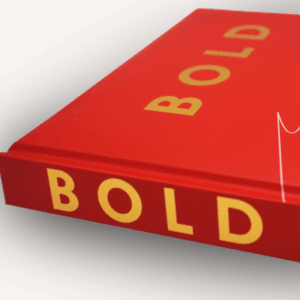
Best for: Luxury packaging, book covers and jackets

Cold Foil
Process:
- Cold foiling is typically done inline during the same pass as the printing process
- A UV-curable adhesive is printed onto the substrate using a printing plate.
- Foil (generally silver, sometimes gold) is pressed onto the adhesive and cured with UV light.
- The foil sticks only where the adhesive was applied.
- CMYK inks are then printed on top of the foil which can create a wide range of metallic colours
Materials: Mostly paper and board.
Pros:
- Faster and more cost-effective for long runs.
- An inline process, so no need for extra dies / processes.
- Impressive effects and colour range achievable as this is essentially printing onto a foil substrate.
Cons:
- Not suitable for uncoated or textured papers
- Flat surface, less tactile
- Requires specialised equipment, not all presses are equipped for cold foiling – limited supplier choices
Best for: Magazines, labels, packaging with high-volume runs.
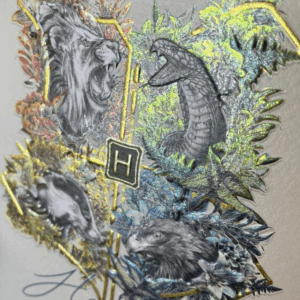


Digital Foiling
Process:
- Uses digital printing technology to apply foil without dies.
- Typically involves printing a toner or varnish layer that the foil adheres to.
Materials: Paper and card stock.
Pros:
- No dies needed—great for on demand, short runs and personalisation.
- Allows for fine detail and layered textures thanks to precise digital registration.
- Some presses can add spot varnish and emboss effects in a single pass.
- Lower setup cost but might be higher running costs depending on coverage.
Cons:
- Slightly less durable than hot foil.
- Limited to certain foil types and substrates.
- Requires specialist machinery (Scodix , MGI)
- Design process more complex, requires more skill if multi layer embossing effects required
Best for: prototypes, short-run packaging, book covers


What Foil Blocking Techniques for Your Job
Still not sure which direction to go? Here are a few things to consider when speccing your next project:
Hot foil works brilliantly on textured or uncoated stocks
Cold or digital foil prefers smooth, coated boards
Tiny lines and delicate detail? Digital or UV cold foil is your friend
Big bold Design? Choose Hot foil
Short runs = digital foil
Medium to high volume = hot foil stamping / cold foil
Want a deboss or textured finish? Consider hot foil or digital foil with a raised varnish / emboss
Need flat but bright metallics with wide colour gamut? Cold foil could be best
- Hot foils – higher energy usage as foil is applied with heat and pressure. Paper with hot foil stamping can be recycled
- Cold foils – no heat in process, so less energy but uses uv curable adhesives which may have environmental impact
- Digital foils – applies foil directly from a digital file, less waste and lower energy use.
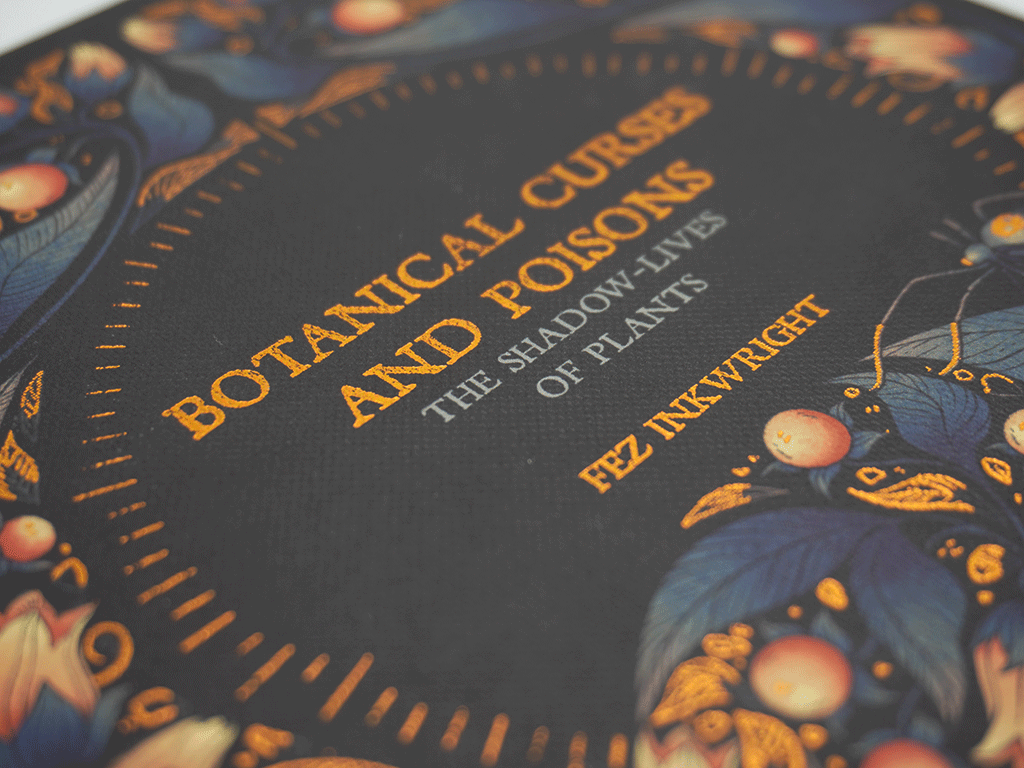

Thinking of Adding Foil Blocking Techniques to Your Next Project?
Our expert team can help you no matter what is your printing project or the stage you’re at, we can walk you through options that work for your format, timeline, and budget.
Not sure where to start? No problem. Just drop us a message. We’re always up for a chat about paper, foil, or anything print related!
Book Edging Guide: Types, Techniques & Finishes
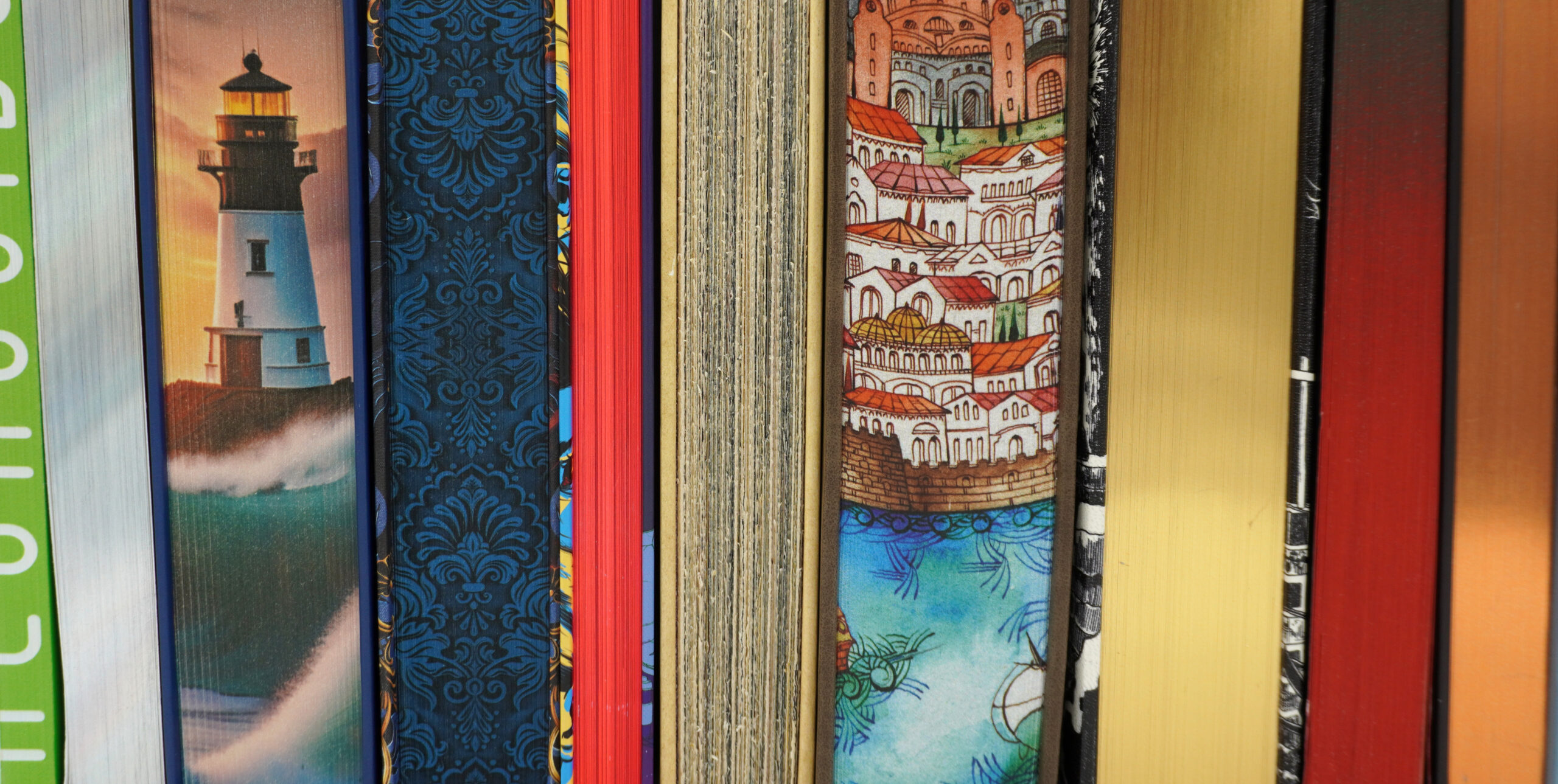
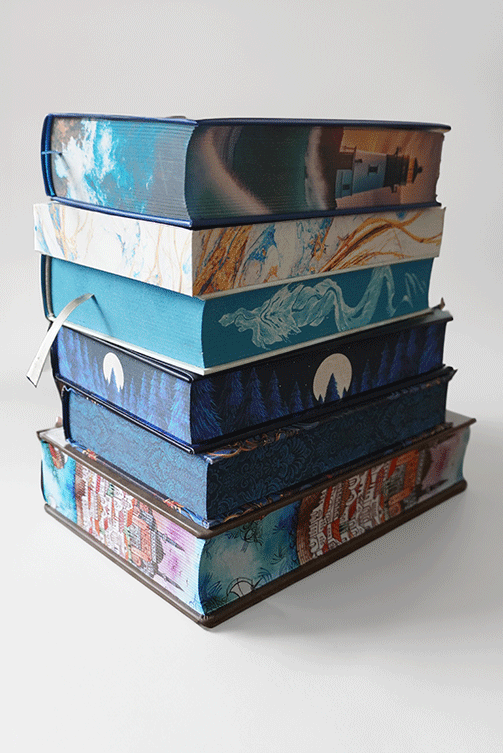
Book edging is a trendy way to give books a unique, high-end look. Whether you’re aiming for something bold, elegant, or completely custom, adding color or design to the edges of a book block can make a big impact. If you’re thinking about incorporating this trending technic into your next project, here’s your guide to Book Edging!
What is Book Edging?
Book edging is the process of adding color, patterns, or detailed designs to the outer edges of a book’s pages. This technique is used to make a book stand out, or align with a specific brand or theme. There are three main ways to achieve this effect: manual, automatic, and digital processes. The right choice depends on the level of detail you need and your budget.
Book Edging Guide: Three Ways to Print
1. Manual Process
First, the edges are sanded to ensure the paint or ink adheres properly.
Two main techniques are used:
- Spray painting – Best for solid, single-color edges.
- Silkscreen printing – Allows for single or multi-color patterns.
- Since this method takes time and skill, it’s usually outsourced to specialist printers.
- Works well for custom book edges and card decks.
2. Automatic Process
- Like the manual process, edges are sanded before applying paint.
- Uses an automated spray system to apply a single solid color.
- Great for book edges and card decks when you need a quicker turnaround.
3. Digital Process
If you want detailed, multi-color designs, digital book edging is the best choice.
- Unlike the other methods, sanding isn’t always necessary as long as the edges are neatly trimmed.
- Uses inkjet printing to apply full-color, highly detailed designs.
- Ideal for premium book edging projects.


Book Edging Guide: How does it work
No matter which method you choose, the process generally follows these steps:
- Securing the Book Block – The pages are tightly clamped together to prevent movement.
- Prepping the Surface – If needed, the edges are sanded for a smooth, even application.
- Masking – Any areas that shouldn’t be painted are carefully covered.
- Applying Paint or Ink – This can be done using brushes, rollers, spray systems, or inkjet printing.
- Drying – Paint or ink is dried quickly using air blowers or heat guns to prevent smudging.
- Final Check & Clean-Up – The edges are inspected for quality, and any excess paint is cleaned up before the book is assembled.
Size and Format
If you’re planning on book edging, here are some important technical details to keep in mind:
- Spine width: Between 6.5mm (0.25 inches) and 76mm (3 inches).
- Book dimensions: Works best for books sized 102mm x 152mm (4×6″) to 228mm x 305mm (9×12″).
- File specifications:
- Submit high-resolution PDFs.
- Use CMYK color mode.
- Include 3mm bleeds.
- Each edge requires a separate file.
Things to Consider
If your book design has bleeds (where ink or color extends to the edges), keep these factors in mind:
- Color Consistency: There may be slight variations in large solid color areas.
- Banding Issues: Sometimes, color banding can appear in the bleed areas.
- Best Practice: Book edging works best on designs without bleeds to ensure even color coverage.
Want to explore book edging for your next project? Get in touch with us today, our team of expert will guide through all the process!

London Book Fair 2025 | Meet Us at Stand 6A105!
Imago is thrilled to be returning to The London Book Fair 2025! This global event is the perfect opportunity to connect with publishers, suppliers, and industry professionals. Whether you’re an existing client or discovering us for the first time, we’d love to discuss your print and production needs in an engaging and collaborative setting.
Meet The Imago Team at London Book Fair 2025
Find us at stand 6A105 on the Ground Floor of the Grand Hall from March 11–13, 2025, at Olympia London. Our stand is designed to be a welcoming space with dedicated meeting tables for conversations and a showcase of appropriate samples and materials available.
If you can’t make it to the event but still would like to talk to one of our experts, please get in touch with us and we’ll redirect you to the right team member for your project.
London Book Fair 2025 – Key Details
- Dates: 11th – 13th March 2025
- Location: Olympia London, Hammersmith Road, London, W14 8UX
- Opening Hours:
- Tuesday 11th March: 9am – 6:30pm
- Wednesday 12th March: 9am – 6:30pm
- Thursday 13th March: 9am – 5pm
Where is The London Book Fair 2025 Taking Place?
The London Book Fair 2025 is taking place at Olympia London. The full address is Olympia London, Hammersmith Road, London, W14 8UX and you can get directions using the map provided below.
How To Find Imago at The London Book Fair
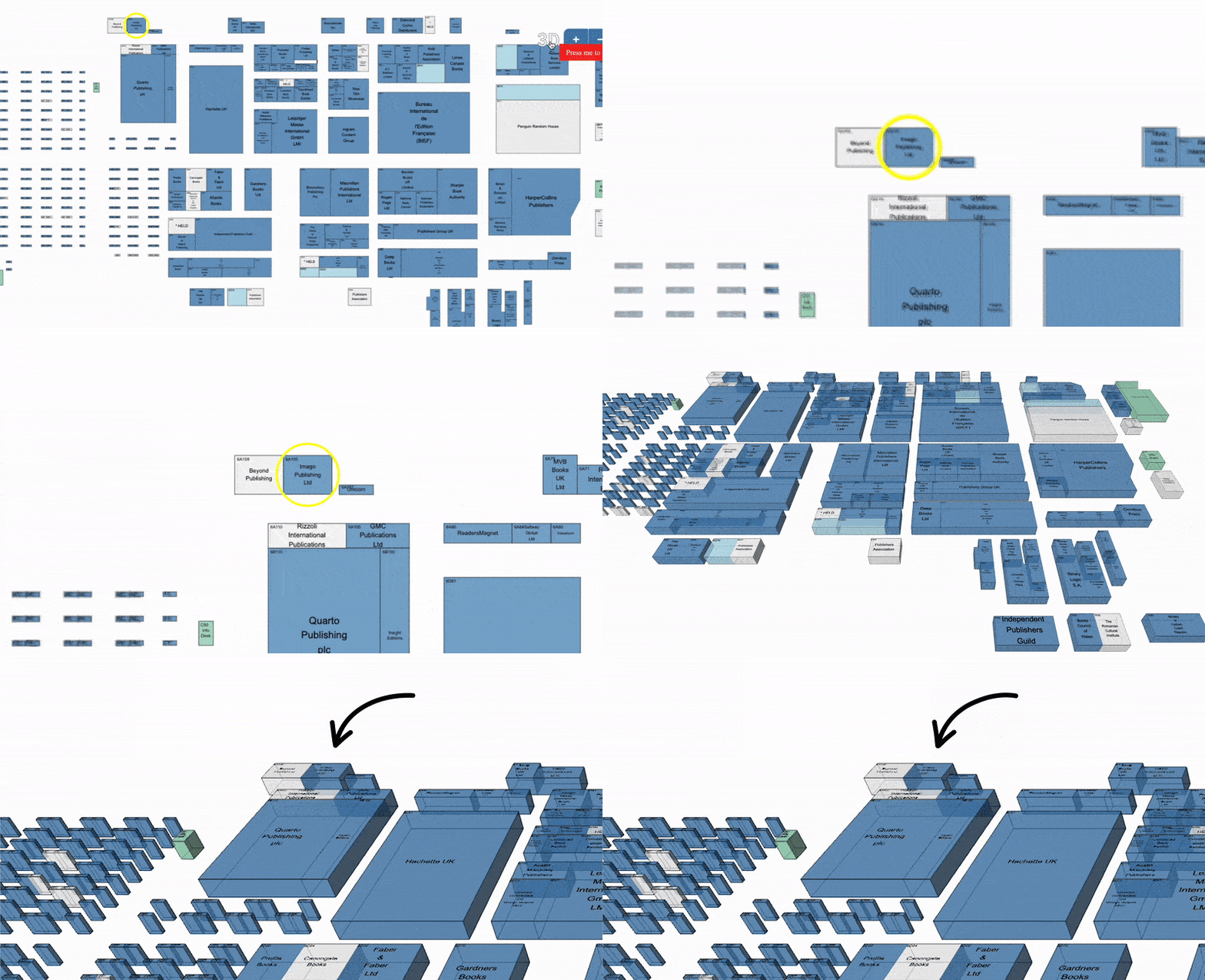
Imago are located on Stand 6A105 on the Ground Floor of the Grand Hall at The London Book Fair. We have three dedicated meeting tables (and yes, with comfortable chairs) to ensure we have enough space and time to discuss your project!
The London Book Fair Floor Plan
Take a look at the 2D and 3D animated London Book Fair 2025 floor plan below so you can find us!
The show is quite large, so we recommend you pick up a floor plan at the entrance to the show. But we’re always on hand to help. If you can’t find us on the day, please email enquiries@imagogroup.com and a member of the team will be in touch to help guide you to our stand.
Find Inspiration on Our Stand!
We’ll be showcasing an exciting range of samples from our recent projects, Collector books, Stationnery, Jigsaw Puzzles, and more. If you’ve worked with us before, you’ll be pleased to see fresh, innovative products.
Looking for inspiration? Our diverse selection of materials and formats will spark new ideas. No matter what stage your project is in, we’re here to help.

Book a Meeting with Us
Want to discuss your next print or production project? Schedule a meeting with us at The London Book Fair 2025! Simply fill out the form below, providing details about your business and project requirements, and we’ll be in touch to arrange a time.
We’re looking forward to catching up and exploring newideas. See you at Stand 6A105!